What you need to know
- A platform conversion is one event, not the full customer outcome.
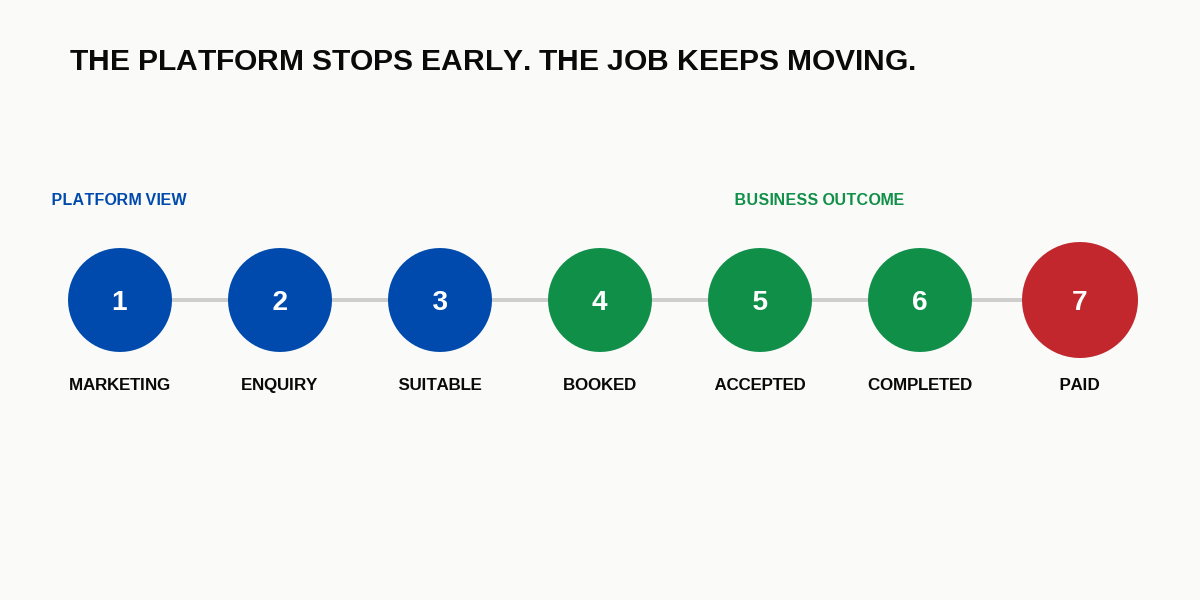
- Seven simple stages show where suitable work moves or stops.
- Each stage needs a clear definition, owner and evidence source.
- Only send downstream value back to an ad platform through a reviewed, consent-aware setup.
What are the seven stages?
Use the smallest set of stages that matches how your business works. For a quote-based home-service business, this seven-stage map is a useful start.
| Stage | Plain meaning |
|---|---|
| 1. Marketing event | The platform recorded the action it was told to count |
| 2. Genuine enquiry | A real person asked about a service |
| 3. Suitable work | The request fits the agreed service, area and capacity |
| 4. Booked next step | A visit, call or assessment was agreed |
| 5. Accepted work | The customer agreed to proceed |
| 6. Completed job | The agreed work was finished |
| 7. Paid value | Payment was confirmed in the supported record |
How does this help an electrician?
An electrical enquiry may book straight into a work order, or it may need a site visit and quote. The same stage names should not force both paths to look identical. They should make the differences clear.
If many genuine enquiries never reach suitable work, review targeting and service fit. If suitable work reaches a quote but not a decision, review the quoting path. If completed jobs do not show paid value, review the payment link before changing marketing.
Why can the platform conversion be misleading?
The platform is not necessarily wrong. It may be reporting exactly the event configured, such as a form submission or call. The mistake is treating that early event as a paid customer without checking the later business records.
How do you build the stage map?
- Write one plain definition for each stage.
- Name the system and person that owns the evidence.
- Choose a stable identifier for the handoff where possible.
- Keep one customer request from becoming several opportunities by accident.
- Show open and unknown states.
- Check the map with the office and field team before using it in a report.
- Only then decide what outcome is safe and useful to share with marketing tools.
How can you use the map?
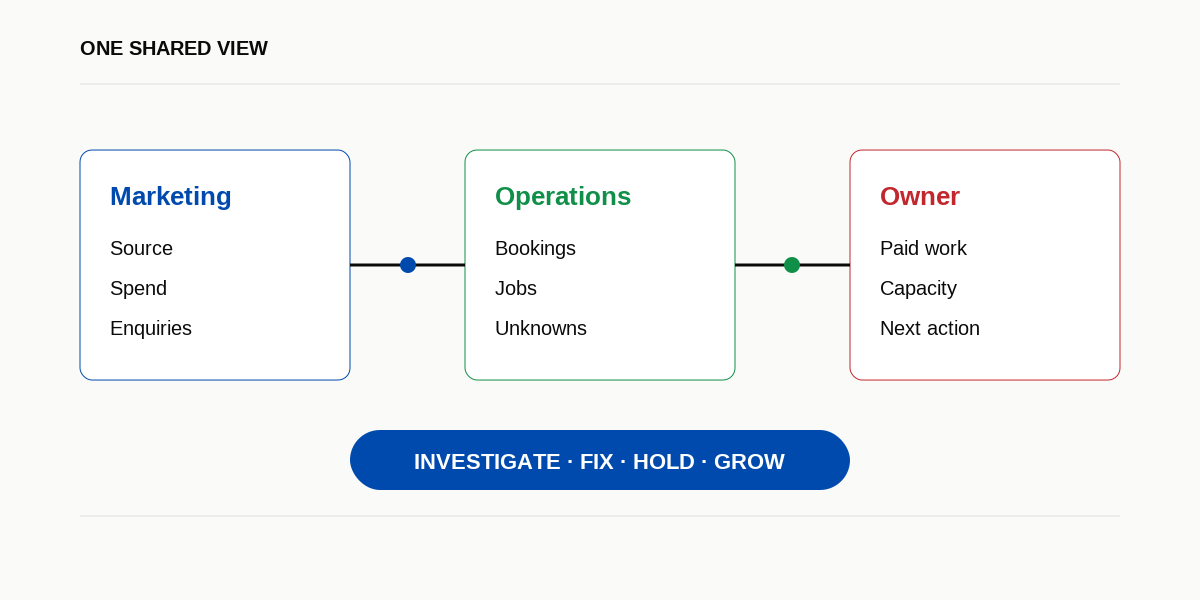
Use it as a short weekly check, not a wall of charts. Look for the stage that changed and ask why. Gibson can help connect the records and agree the first useful action.
Frequently asked questions
Is a phone call a conversion?
It can be a configured marketing conversion and a genuine enquiry. It is not automatically suitable, completed or paid work.
Do all businesses need seven stages?
No. Adapt the map to the real buying and delivery path while keeping early actions separate from paid outcomes.
Can I send paid-job value to Google Ads?
Sometimes, through a reviewed setup that supports the identifiers, consent and current implementation rules. Do not assume every record can be matched.
What if a job skips the quote stage?
Record the path that actually happened. A stage map should explain the work, not force every job into the same route.
Sources and evidence
- Google Ads: value-based bidding best practices: Google explains that conversion values should reflect what outcomes are worth to the business and that offline outcomes can be fed back where the setup supports it.
- Google Ads: manage offline conversions: Google documents how an online ad interaction may be connected to a later offline outcome. A successful upload does not by itself prove attribution or improvement.
- ServiceM8: what job status means: ServiceM8 separates quote, work order, completed and unsuccessful job states. The business still needs a reliable link back to the enquiry source.