What you need to know
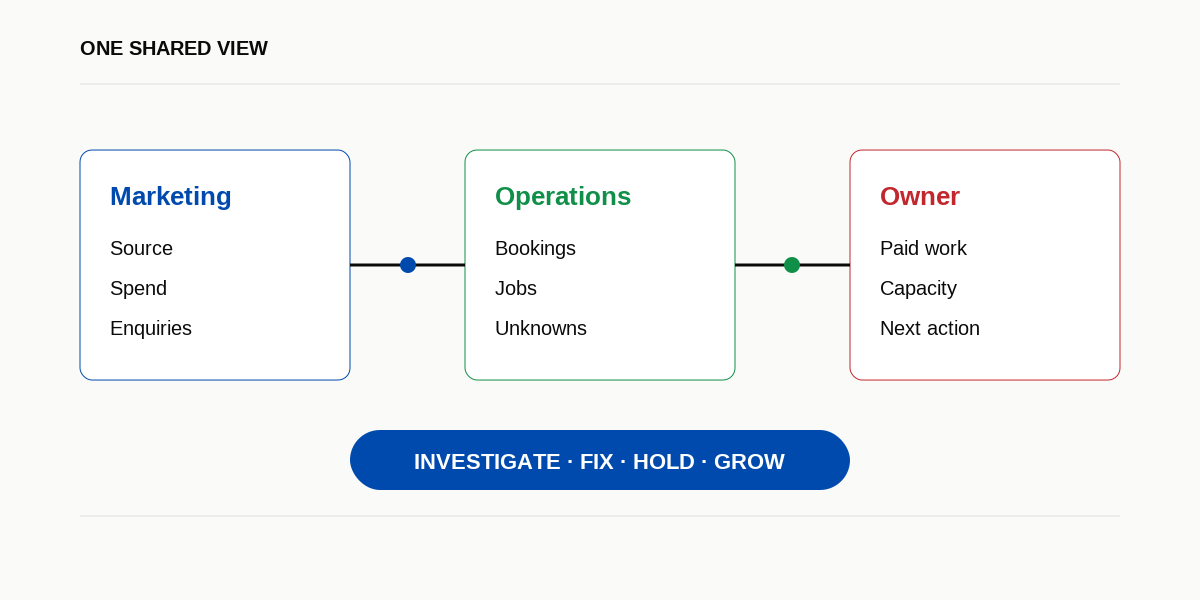
- The agency sees marketing events, operations sees the job flow and the owner sees commercial outcomes.
- A shared view needs common definitions, not a new argument about whose dashboard is right.
- Each measure should have one evidence source and one owner.
- Share useful outcome groups, not more customer data than the work requires.
Why do good teams report different answers?
The marketing provider may count clicks, calls and forms. The office sees whether a real person received a useful answer. Operations sees bookings, quotes and completed work. The owner sees cash, capacity and the work the business wants more of.
These views do not have to compete. They need clear handoffs and the same meaning for words such as lead, suitable, booked, completed and paid.
What would a shared electrician scorecard show?
For an electrical business, the scorecard can stay small. It should answer the next decision, not copy every field from every system.
| View | Useful measures | Owner |
|---|---|---|
| Marketing | Observed source, spend and genuine enquiries | Marketing provider |
| Customer response | Answered, useful response and booked next step | Office or service team |
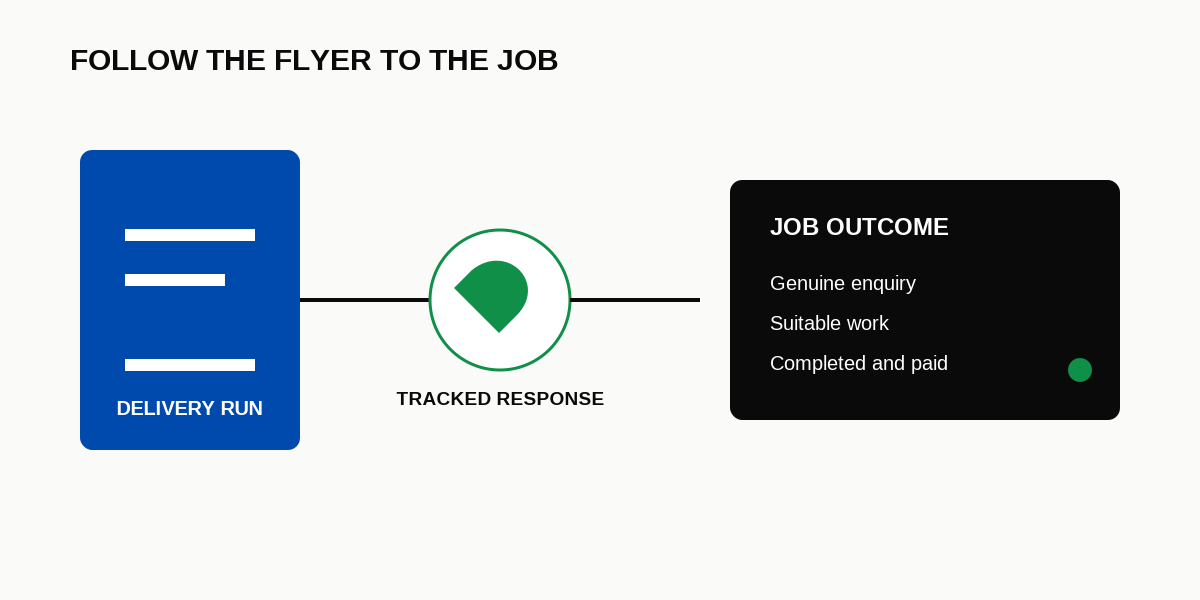
| Job outcome | Suitable, accepted, completed and paid state | Operations and accounts |
| Evidence quality | Unknown, unmatched and duplicate records | Named data owner |
Why should you not force one dashboard to own everything?
One large dashboard can hide where a number came from. It can also create false confidence when a clean chart joins weak records. Keep the source system and matching rule visible.
The goal is not to replace the agency, coach, job system or accounts process. It is to give each party enough supported outcome evidence to make a better decision.
How do you agree the shared view?
- Choose one business question and one campaign cohort.
- Write the stage definitions in plain language.
- Name the evidence source and owner for each measure.
- Agree how duplicates, open work and unknowns will appear.
- Share grouped outcomes unless individual records are required and permitted.
- Meet around the action: investigate, fix, hold or grow.
What role can Gibson play?
Gibson acts as the measurement bridge. We help connect available records, explain the gaps and agree an action plan. The nominated marketing team keeps ad and budget control. See how the records connect or start with Close the gaps.
Frequently asked questions
Does Gibson replace the marketing agency?
No. Gibson supplies supported enquiry and outcome evidence. The nominated marketing team keeps control of campaigns and budgets.
Should everyone have access to every customer record?
No. Share only the data needed and permitted for the agreed work. Grouped outcome feedback may be enough.
Who owns the final number?
Each measure should retain its evidence source and a named business owner. The shared view explains the links and limits.
What should the team do with unknown outcomes?
Keep them visible, find the repeated cause and assign the smallest practical fix.
Sources and evidence
- Google Ads: value-based bidding best practices: Google explains that conversion values should reflect what outcomes are worth to the business and that offline outcomes can be fed back where the setup supports it.
- Google Ads: manage offline conversions: Google documents how an online ad interaction may be connected to a later offline outcome. A successful upload does not by itself prove attribution or improvement.
- ServiceM8: life of a job for an electrician business: The worked product guide shows how office staff, field electricians and job records take part in one service workflow.