What you need to know
- The 26 May 2026 baseline tracked 59 priority terms. Four ranked in the top 100 and none ranked in the top 10.
- Gibson used AI to compare options, research customer questions, brief work and check evidence. AI did not approve claims or publish pages by itself.
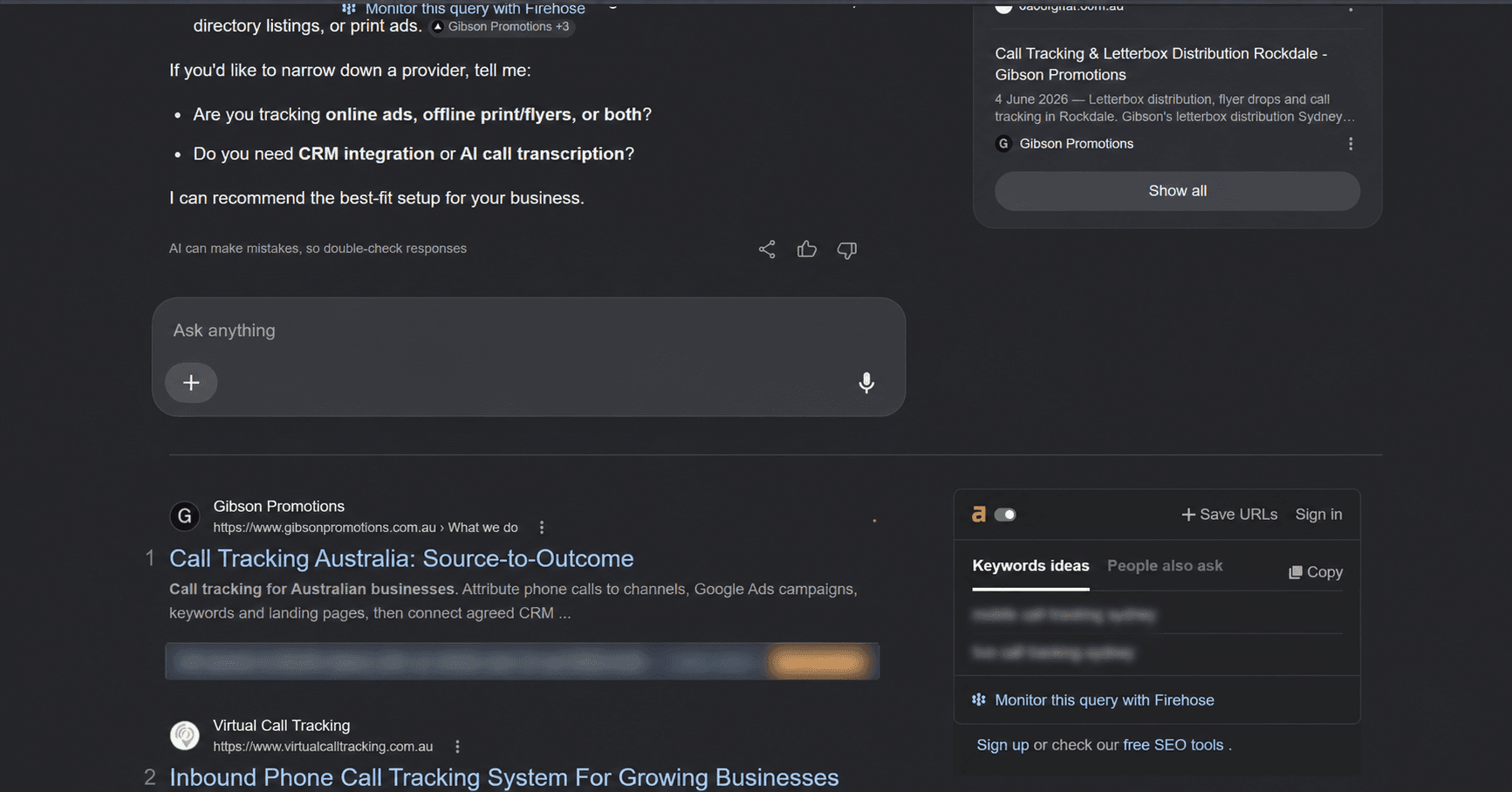
- A dated, depersonalised Australian Google result later showed Gibson as the first standard organic listing and an AI Overview source for one redacted priority query.
- A final 195-page technical SEO and AEO crawl reported zero issues, but technical quality is not the same as commercial success.
- One ChatGPT-referred visit was traced to a genuine quote enquiry. That supports enquiry attribution, not sale value.
- Gibson avoided approximately A$1,500 per month in gross external agency expenditure, while continuing to carry software, data, model, hosting and staff-time costs.
Where was Gibson three months earlier?
The nearest committed baseline is 26 May 2026. Gibson tracked 59 priority terms. Four appeared in the top 100, none appeared in the top 10 and the average position among ranking terms was 31.8.
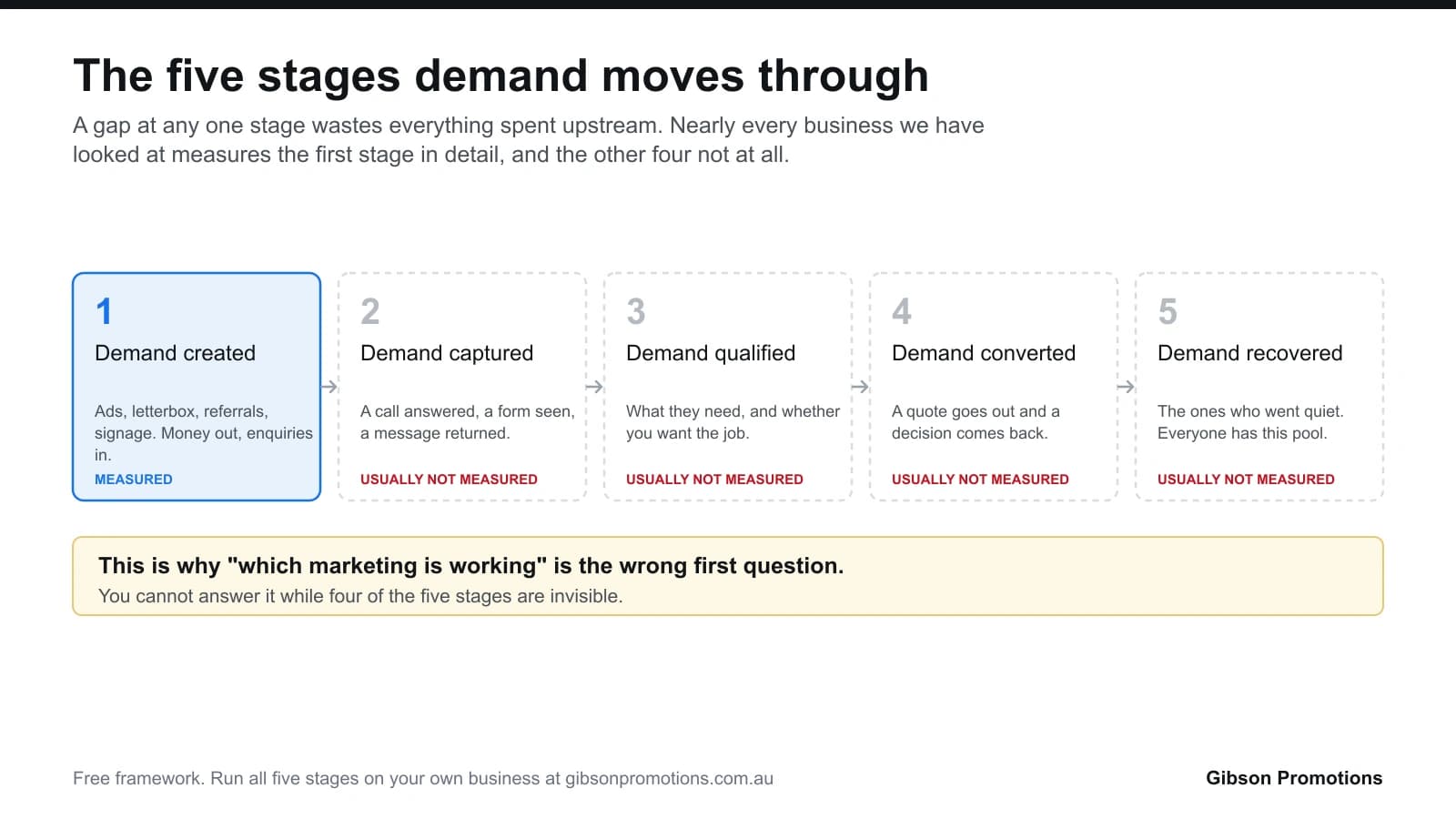
The ranking position was only one part of the problem. Research, content planning, technical work, AI visibility, calls and enquiry records lived in separate processes. Gibson could publish a page, but it could not consistently connect the customer question to the evidence, page owner, search observation and resulting enquiry.
| Baseline measure | Recorded result |
|---|---|
| Priority terms tracked | 59 |
| Terms in the top 100 | 4 |
| Terms in the top 10 | 0 |
| Average position among ranking terms | 31.8 |
What did Gibson build instead of outsourcing the work?
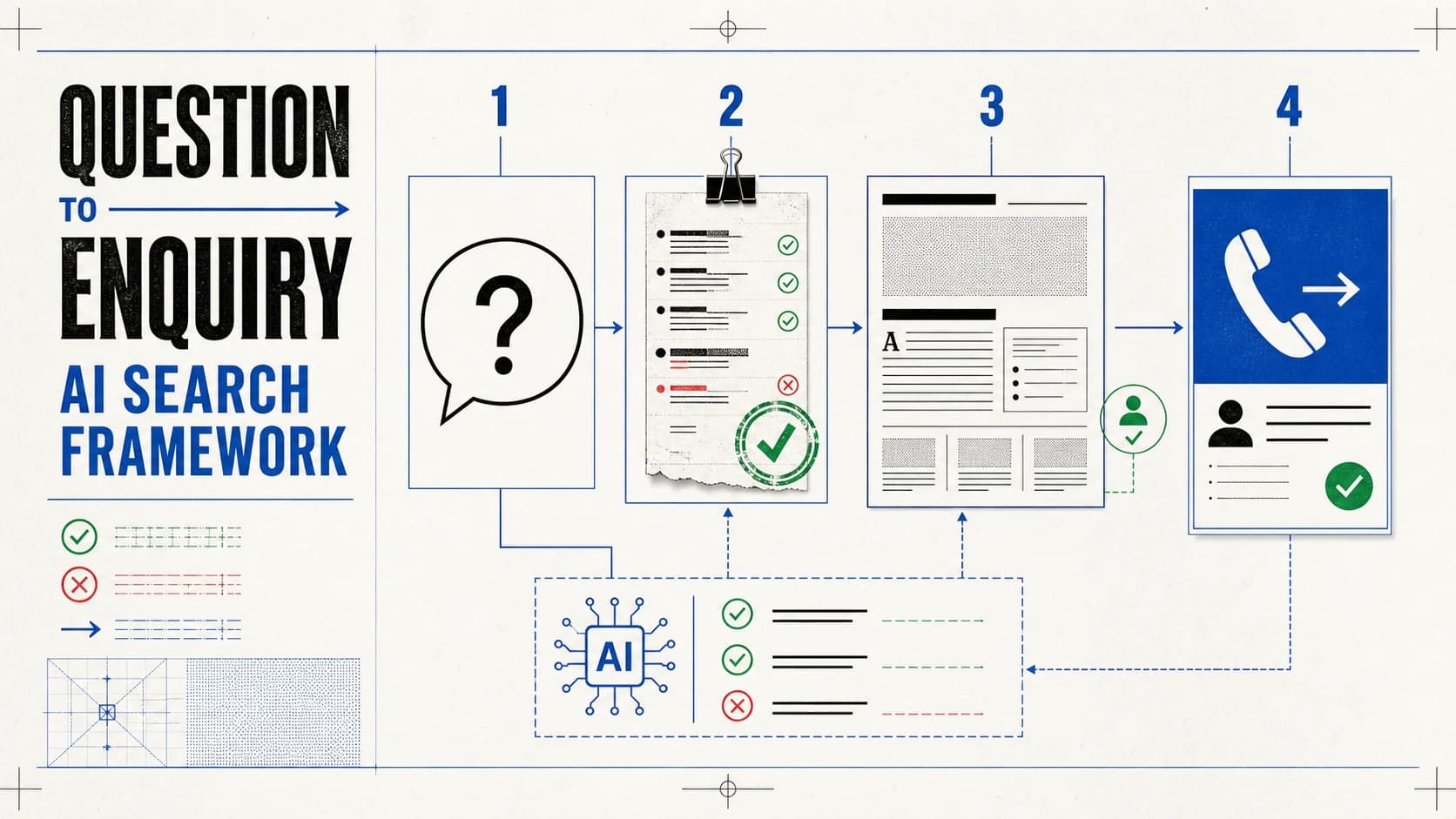
Gibson built a governed website operating system. It begins with a real customer question, checks whether Gibson has evidence worth publishing, chooses the right content format, passes the work through technical and editorial controls, and finishes by asking whether the resulting visibility produced an observable action.
The website is the use case. Gibson tests the method on its own production system before proposing the approach for another business.
- Demand research starts with customer questions, observed searches and existing page evidence.
- One page is assigned to own the answer so several pages do not compete for the same job.
- Claims stop when the supporting record is missing or unapproved.
- Question-based headings, tables and answer blocks are used when they help a person make a decision.
- Every production change passes review, automated checks and a controlled release path.
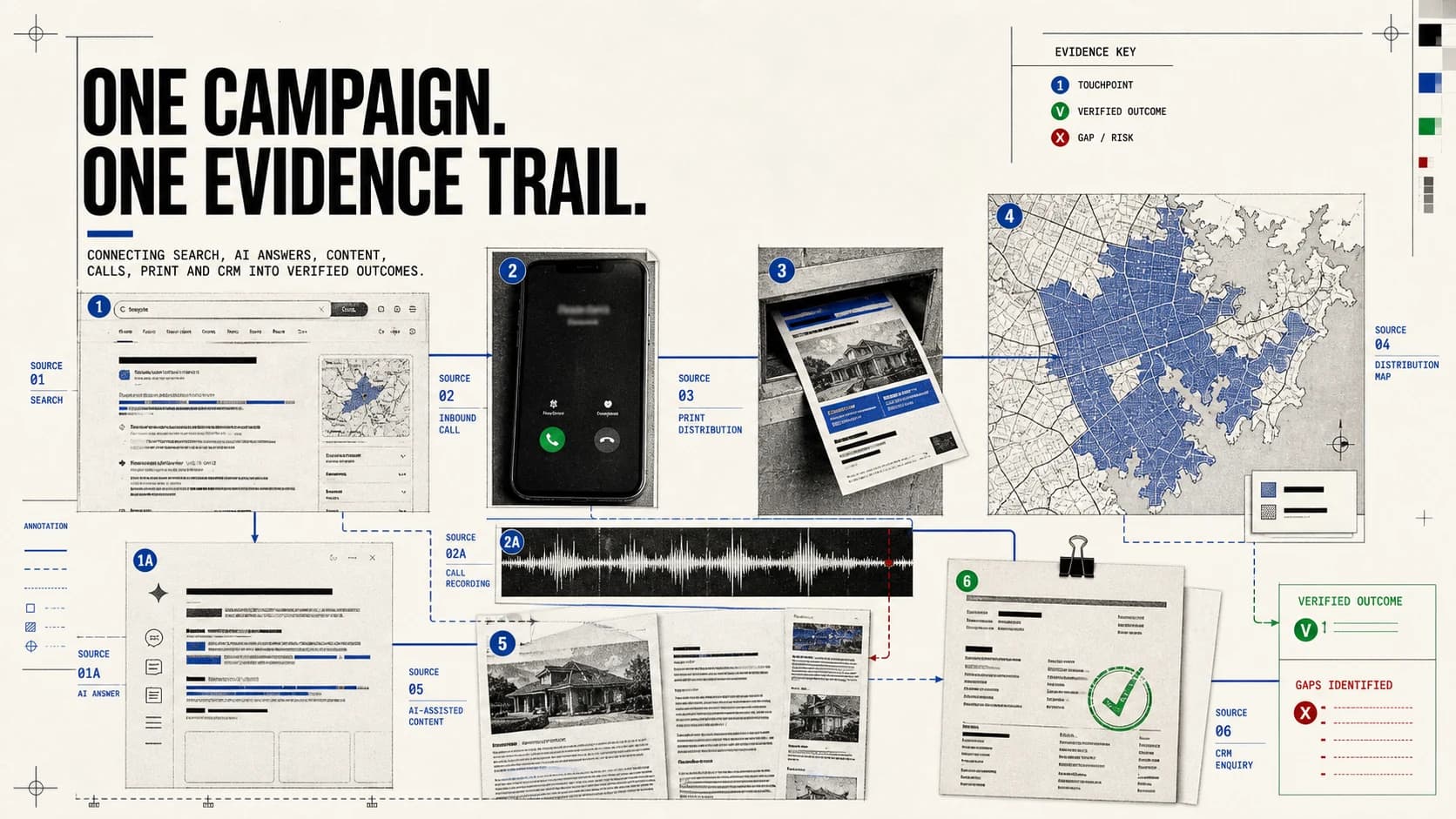
- Search, call, form and CRM evidence is joined only where the source remains observable.
What makes Gibson an AI-enabled business?
Gibson is AI-enabled because AI is part of recurring research, briefing, quality assurance and analysis workflows, while named people retain evidence and publication authority. The capability belongs to the business rather than a one-off prompt or an external agency.
AI helps Gibson compare approaches quickly. It can group related customer questions, identify possible gaps, compare an article with a guide or tool, prepare a first brief, inspect a draft for unsupported claims and summarise technical evidence.
AI does not decide that a claim is true, approve a customer result, guarantee a ranking or publish directly to production. Albert remains accountable for the evidence, commercial position and final publication decision.
“The useful question is not whether AI can write the page. It is whether the business can prove the answer and observe what happened next.”
How do SEO and AEO fit together?
Search engine optimisation (SEO) helps a useful page become discoverable in conventional search. Answer engine optimisation (AEO) makes the page's important answers clearer, better supported and easier for search and AI systems to interpret. Gibson treats AEO as an extension of useful SEO, not a secret replacement for it.
Google states that established SEO foundations remain relevant for AI Overviews and AI Mode and that no special optimisation is required to become eligible.
The practical work is to make important answers clear, self-contained and supported. Structured data must match visible content. Question headings, concise definitions and comparison tables are used when they improve the reader's experience. None of those devices guarantees a citation.
What did the first measurement show?
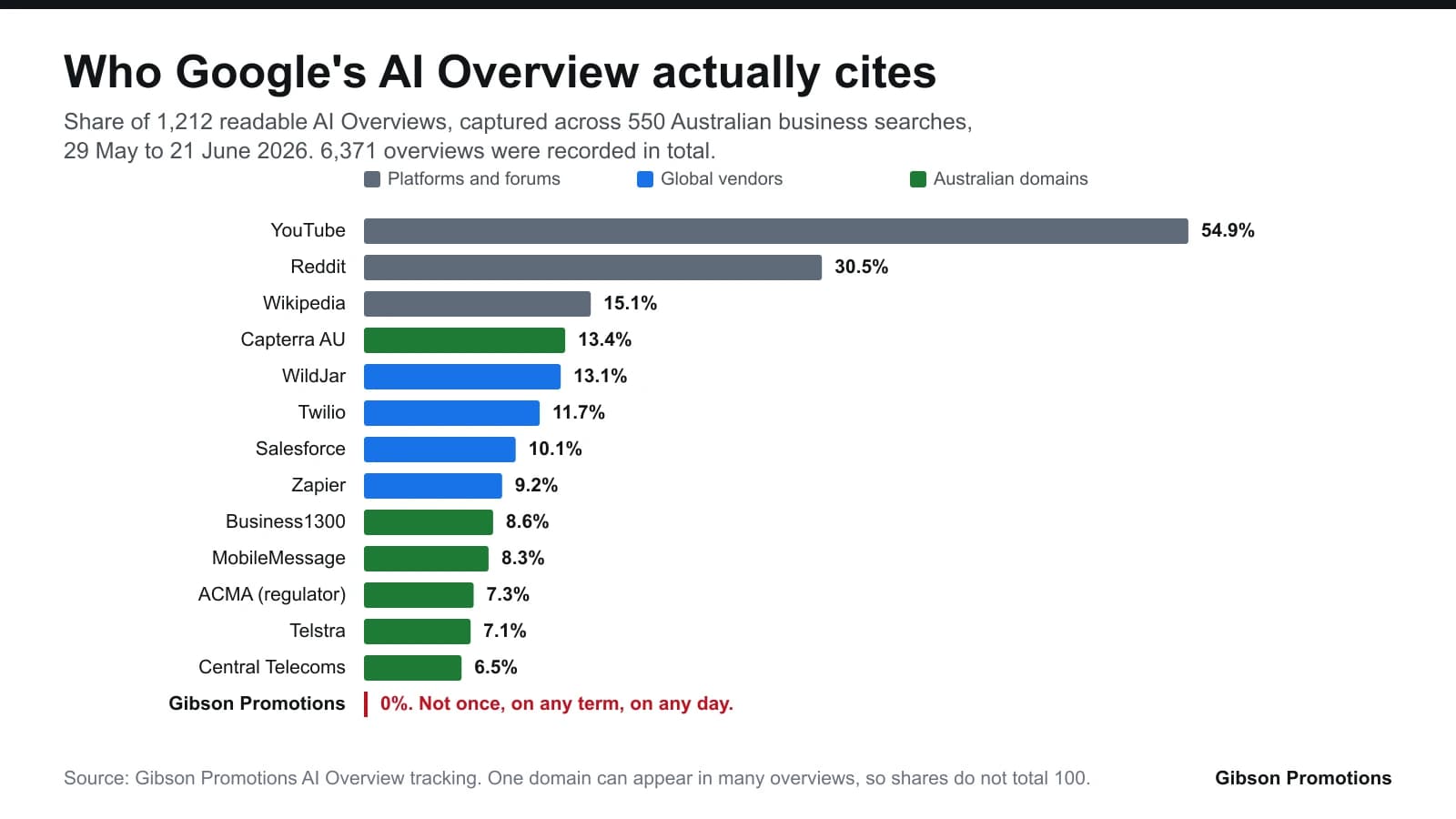
Gibson's earlier research captured 8,338 Australian desktop searches across 550 terms. An AI Overview appeared in 6,371 captures, yet Gibson recorded zero citations in that measured Google AI Overview window.
The later dated observation shows one citation and one first organic position for a redacted priority query. The correct conclusion is narrow: technical readiness alone did not create citations, while useful pages with specific evidence eventually produced at least one observable search and AI result. Repeated measurement is still required before claiming sustained growth.
What does the dated Google evidence show?
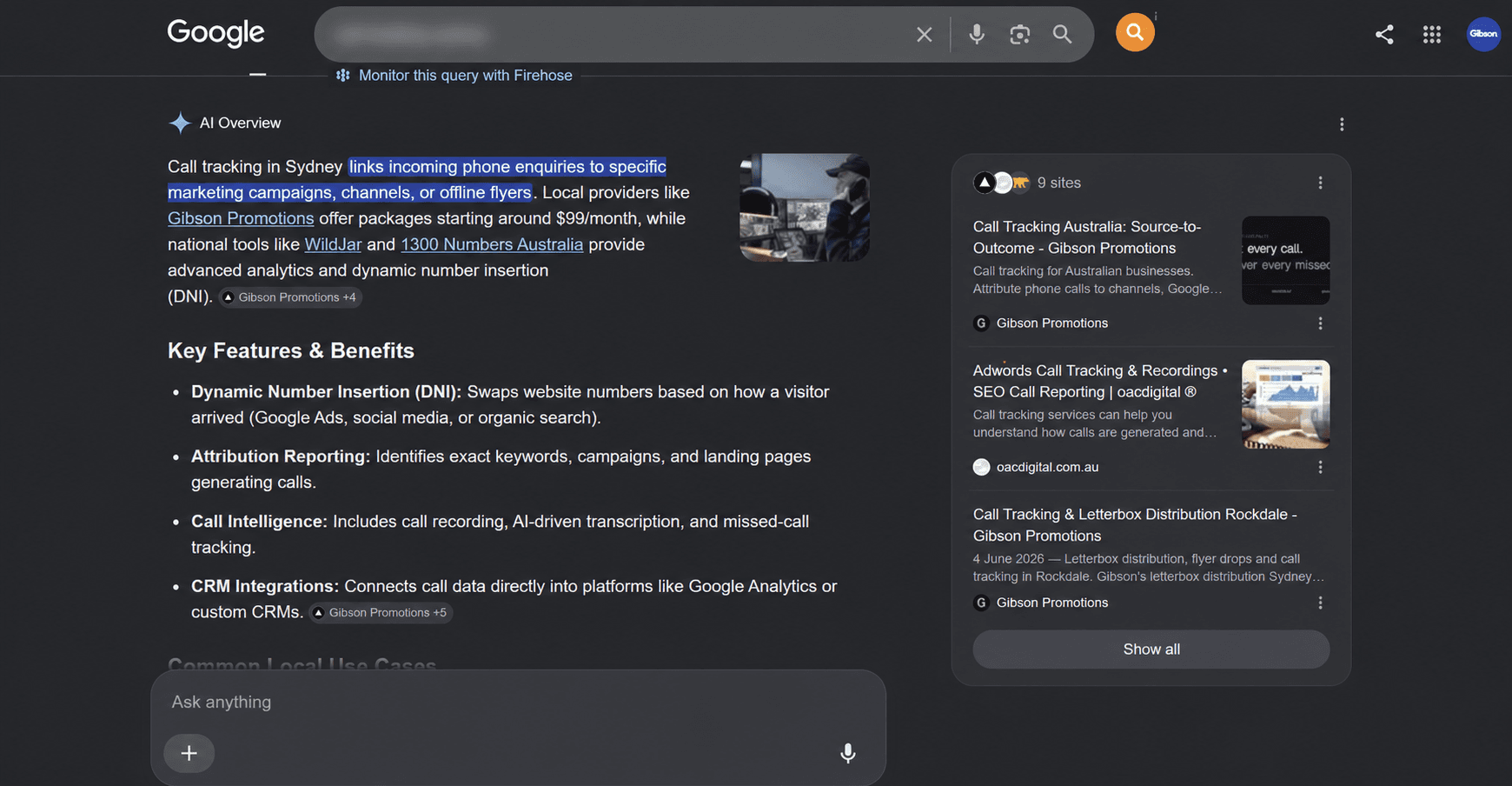
On 6 August 2026, a depersonalised Australian Google result showed Gibson as the first standard organic listing for one priority service query. The same result page included Gibson in the AI Overview source panel.
The public evidence uses two readable captures from that result page. The exact query in the Google search field and the keyword suggestions in the Ahrefs panel are obscured. The citation, numbered organic position and surrounding result context remain visible. The observation is specific to one query, location, device setup and date. It is not a permanent ranking claim or evidence of broad visibility growth.
How does call tracking connect search, digital and print enquiries?
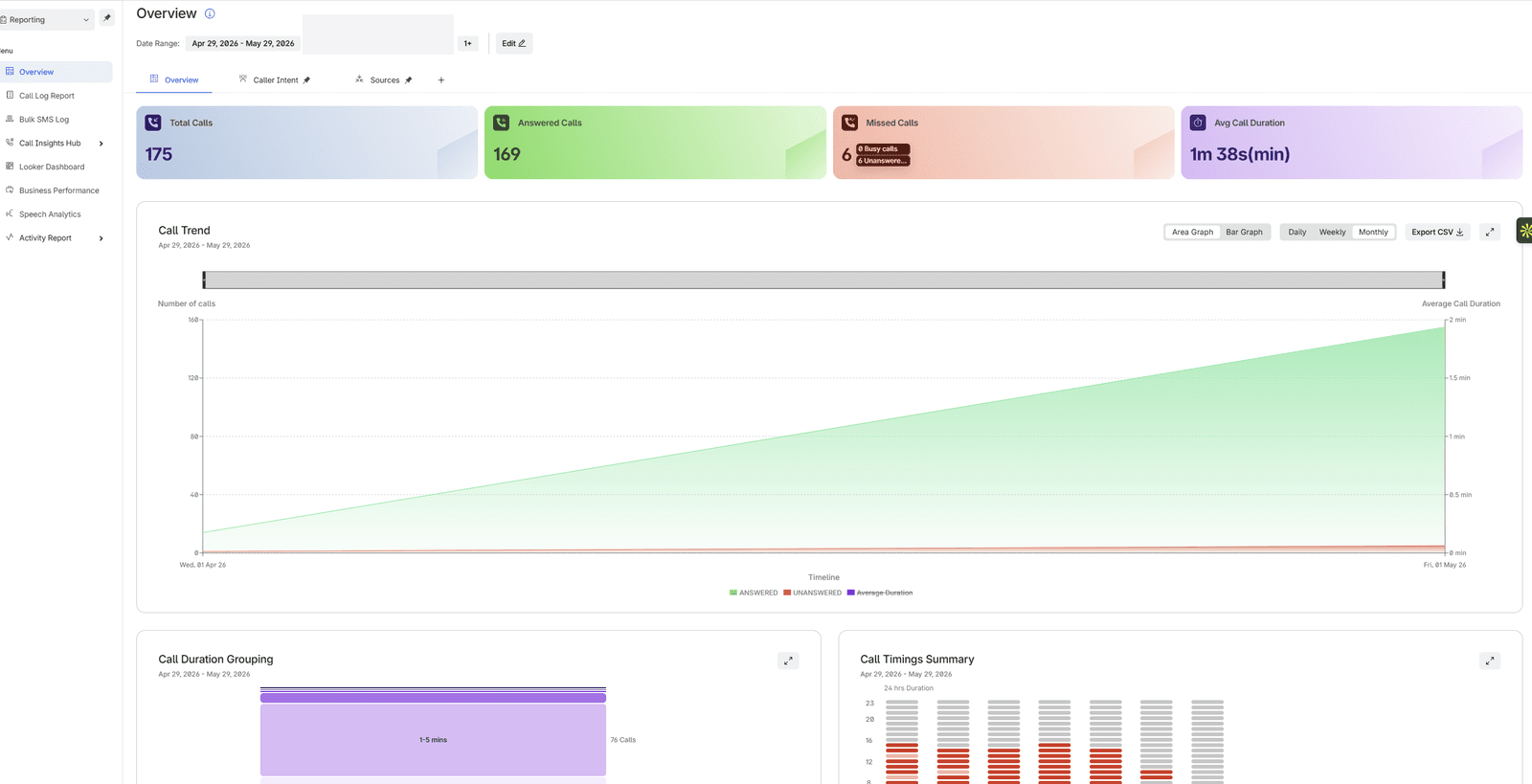
SEO and AEO can help a customer discover an answer. They do not show what happened after the customer called, submitted a form, responded to a flyer or moved between channels.
Where the implementation supports it, a tracked number or dynamic number insertion rule can connect a call to an observable source, campaign or landing-page journey. A dedicated number can also connect an offline placement to the calls it produces. Forms preserve their own observable context, and approved enquiry records can move into reporting and Zoho CRM.
AI can analyse the joined records and identify themes or evidence gaps. It must not infer a source that the tracking system did not observe.
What did the production checks establish?
The final documented production crawl covered 195 pages and reported zero technical SEO or AEO issues. All 169 sitemap routes passed the recorded end-to-end checks.
Those numbers establish the condition of the tested production release. They do not prove that every page will rank, that every AI system will cite Gibson or that technical quality automatically produces revenue.
| Measure | Recorded result | Evidence boundary |
|---|---|---|
| Technical SEO and AEO crawl | 195 pages, zero reported issues | Final documented production run |
| Sitemap routes | 169 of 169 passed | Recorded end-to-end checks |
| AI-search enquiry | One genuine quote enquiry | Attributable visit, not sale value |
Did Gibson remove A$1,500 per month in agency expenditure?
Gibson avoided approximately A$1,500 per month in external SEO or content-agency expenditure by building the operating capability internally.
That is a gross avoided-expenditure comparison, not a claim that the internal system is free. Gibson continues to pay for software, data, models, hosting and staff time. The commercial advantage is ownership of the process, evidence and improvement cycle, not zero operating cost.
What can another business copy?
A business does not need Gibson's complete operating system to improve one answer. It can begin with one genuine customer question, one approved piece of evidence and one measurable next action.
The separate Question-to-Enquiry AI Search Framework provides a copyable prompt, evidence check and simple measurement record. A plain-text starter can be downloaded and used in the business owner's own AI account without sending information to Gibson.
Frequently asked questions
Does AI write Gibson's website automatically?
No. AI assists with research, comparison, briefing, drafting and checking. Evidence approval, implementation and publication remain governed human decisions.
Does Gibson need Ahrefs to run this process?
Gibson does not currently rely on an Ahrefs subscription for this operating model. It uses first-party analytics, Search Console, targeted research, selected data services and internal automation. The method still carries software, data, hosting, model and staff-time costs.
Is AEO different from SEO?
Gibson uses AEO to describe answer structure, evidence and citation measurement added to established SEO foundations. It is not a separate secret ranking technique.
Does structured data make an AI cite a page?
No. Structured data can help systems understand visible page content and may support eligibility for particular search features. It does not guarantee indexing, ranking, rich results or AI citations.
Can Gibson guarantee that this approach will improve rankings?
No. Rankings and citations vary by query, competition, search system, location and time. Gibson can define, implement and measure the work, but it cannot promise how an external search or AI platform will respond.
Can I use the free framework with my own AI account?
Yes. The starter works with ChatGPT, Claude, Gemini or another capable assistant. Use public, aggregate or approved information only, and review every output before publication.
Sources and evidence
- Google Search Central: AI features and your website: Google's guidance on eligibility, SEO foundations, visible content, structured data parity and measurement for AI features.
- Google Search Central: creating helpful, reliable, people-first content: Google's self-assessment guidance for original, useful and trustworthy content.
- Google Search Central: generative AI content guidance: Google's guidance on accuracy, quality, context and responsible use of generative AI.
- Google Search Central: structured-data guidelines: General rules requiring structured data to represent visible page content accurately.