What you need to know
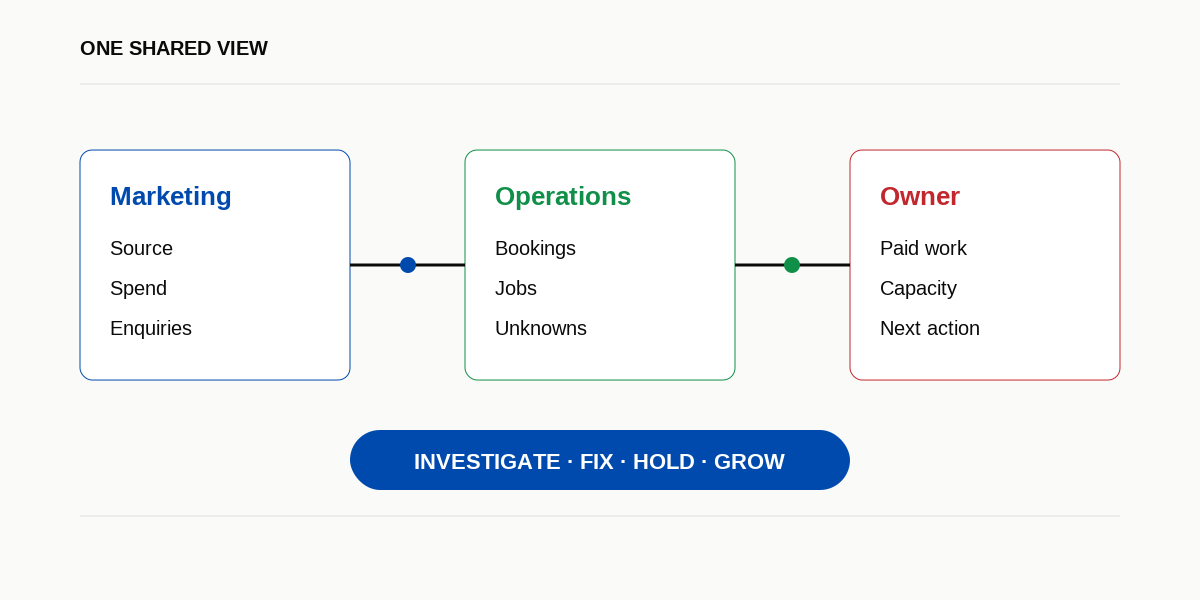
- Marketing, sales and service need the same customer path, not the same dashboard.
- Review one customer group from source to paid work.
- Read a few real records alongside the totals.
- Choose one weak handoff and one owner each week.
- Do not change ads, scripts and operations at the same time.
What is a weekly demand review?
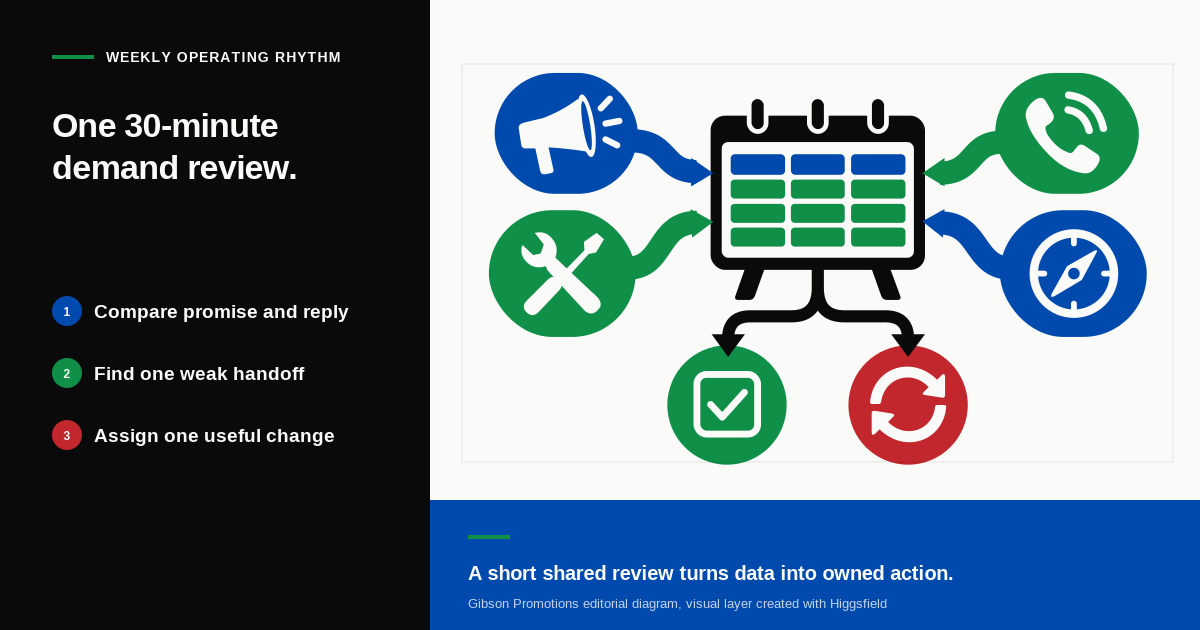
A weekly demand review is a 30-minute meeting that follows one group of customers from marketing through response, booking, delivery and payment. It joins the parts of the business that usually report separately.
The purpose is to find one weak handoff and agree one change for the next week. It is not a general status meeting.
What can a game-tape review teach a small business?
Acquisition.com's official training describes a game-tape meeting where sales, product, marketing and customer service compare what the company promises with what it delivers.
Gibson's version uses the same alignment idea but starts with customer records. The team reviews supported examples, not opinions about who caused the problem.
Who should attend?
- The person responsible for marketing or the agency relationship.
- The person who answers and follows up enquiries.
- The person responsible for booking or service delivery.
- The owner or manager who can change a rule.
What should the 30 minutes cover?
| Minutes | Question |
|---|---|
| 0 to 5 | What did we promise and which group are we reviewing? |
| 5 to 12 | What enquiries arrived and how quickly were they answered? |
| 12 to 18 | Which enquiries were suitable and what next step was offered? |
| 18 to 24 | What was booked, completed and paid? |
| 24 to 28 | Where is the first weak or unknown handoff? |
| 28 to 30 | Who owns one change by next week? |
Which records should the team read?
Read one good handoff, one poor handoff and one unknown. The examples make a number understandable and stop the meeting from blaming a channel for an operations problem.
Remove personal details from any shared training view and restrict customer records to people who need them.
What should the team avoid changing?
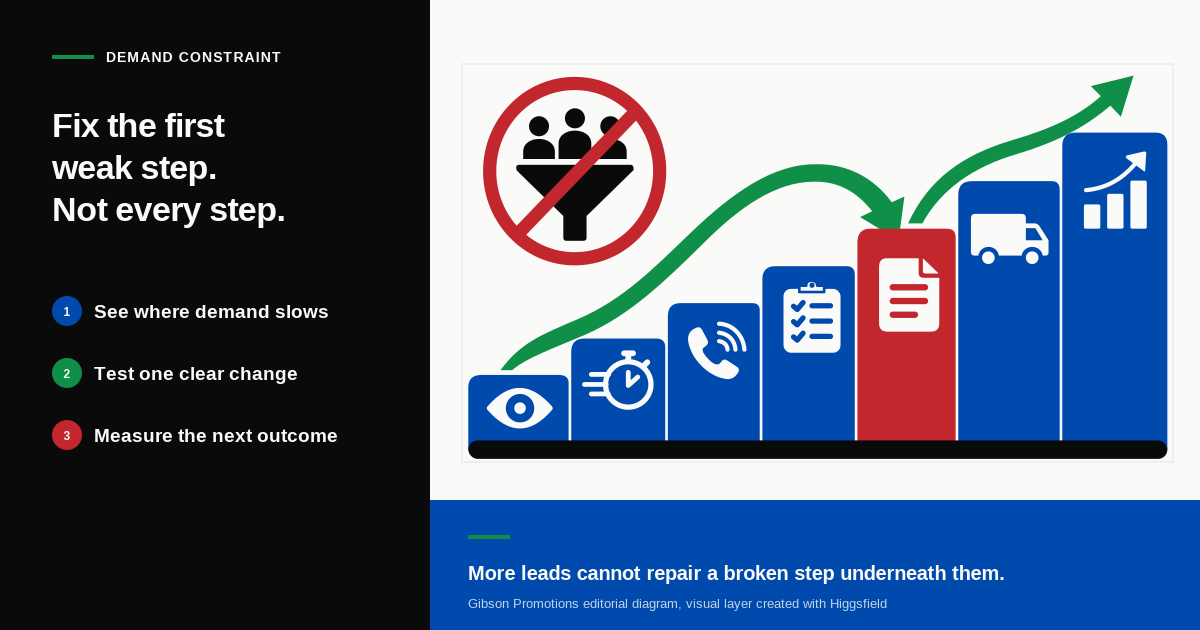
Do not change the audience, offer, ad, phone script, follow-up timing and booking process in the same week. Too many changes make the next review impossible to interpret.
Choose the smallest useful change at the first weak handoff.
What leaves the meeting?
- One stated constraint.
- One named owner.
- One change.
- One expected observable result.
- One review date.
- A note of what remains unknown.
Frequently asked questions
Does every small business need a weekly demand meeting?
Use it when marketing, follow-up and service reports are disconnected. A very small business can run the same review alone in 20 to 30 minutes.
Should the marketing agency attend?
Invite the agency when it can explain source, spend, creative and lead records. Customer and revenue data should be shared only at the level needed.
How many changes should we make each week?
Prefer one change at the first supported bottleneck. Several simultaneous changes make cause and effect unclear.
What if the team disagrees?
Return to the record, state what is supported and mark the rest unknown. Agree the next evidence needed.
Sources and evidence
- Acquisition.com: review game tape with the five As: The official training describes a cross-functional game-tape review involving sales, product, marketing and customer service.
- Google Ads: value-based bidding best practices: Google recommends connecting conversion values to business goals and checking whether the data can support the measurement.