What you need to know
- A business usually has several visible problems but one limiting handoff.
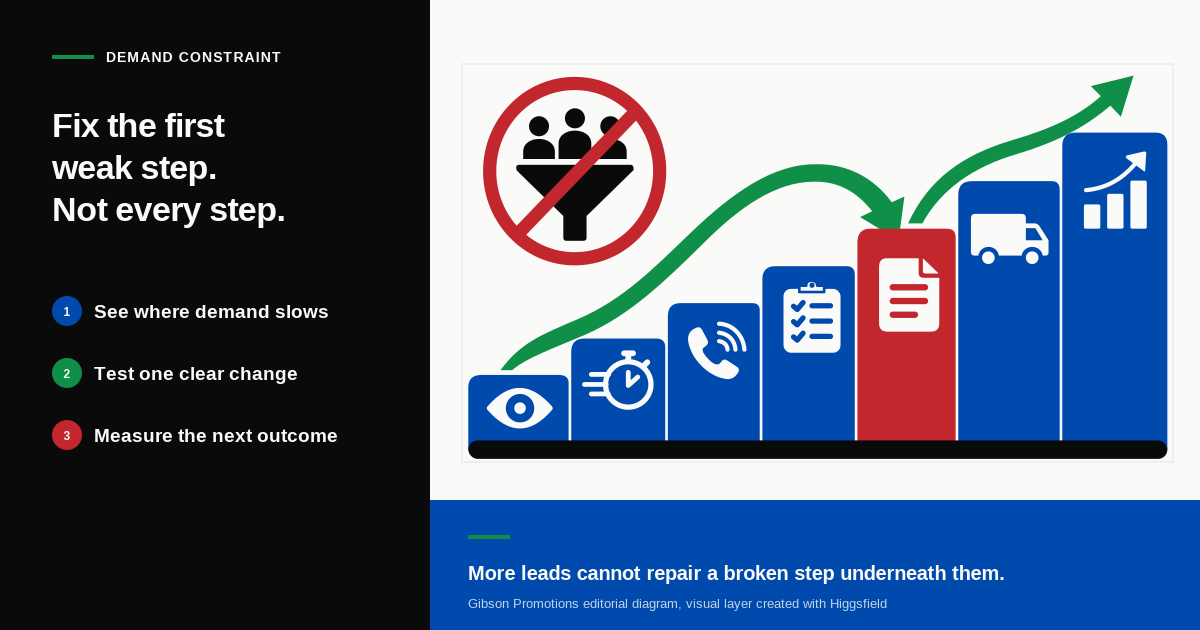
- More leads cannot repair slow response, weak qualification or no delivery capacity.
- Fix the earliest supported bottleneck and measure whether later outcomes improve.
- Unknown records are a measurement problem, not proof of a loss.
- The constraint can move after each improvement.
What is a demand constraint?
A demand constraint is the step that currently limits useful work. It may be too little attention, missed enquiries, slow follow-up, poor fit, weak booking, limited delivery capacity or unpaid work.
The first job is to locate it with records. A complaint from one person or a busy week may reveal a question, but it does not establish the main constraint.
What does the constraint lesson add?
Acquisition.com's Scaling Roadmap tells owners to fix the main constraint at their current stage instead of copying actions from a different stage. Gibson applies that idea to the customer path.
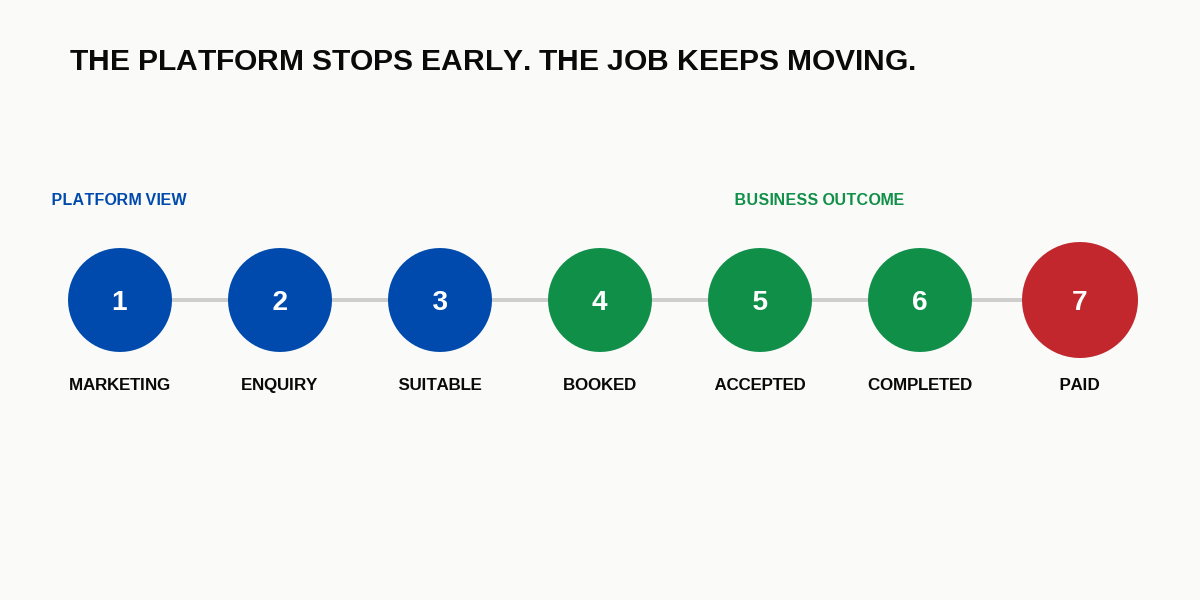
The demand constraint ladder starts with attention and ends with paid work. The owner checks each handoff in order and stops at the first step that cannot support the next one.
What are the seven steps?
| Step | Evidence | Common question |
|---|---|---|
| Attention | Observed reach or visit | Did suitable people see it? |
| Enquiry | Genuine call, form or message | Did they ask for help? |
| Response | Answered conversation | Did someone respond? |
| Qualified | Supported fit decision | Was the work suitable? |
| Booked | Confirmed next step | Did they commit to a time? |
| Completed | Completed work record | Was the work delivered? |
| Paid | Payment state | Was value received? |
Why does adding volume often fail?
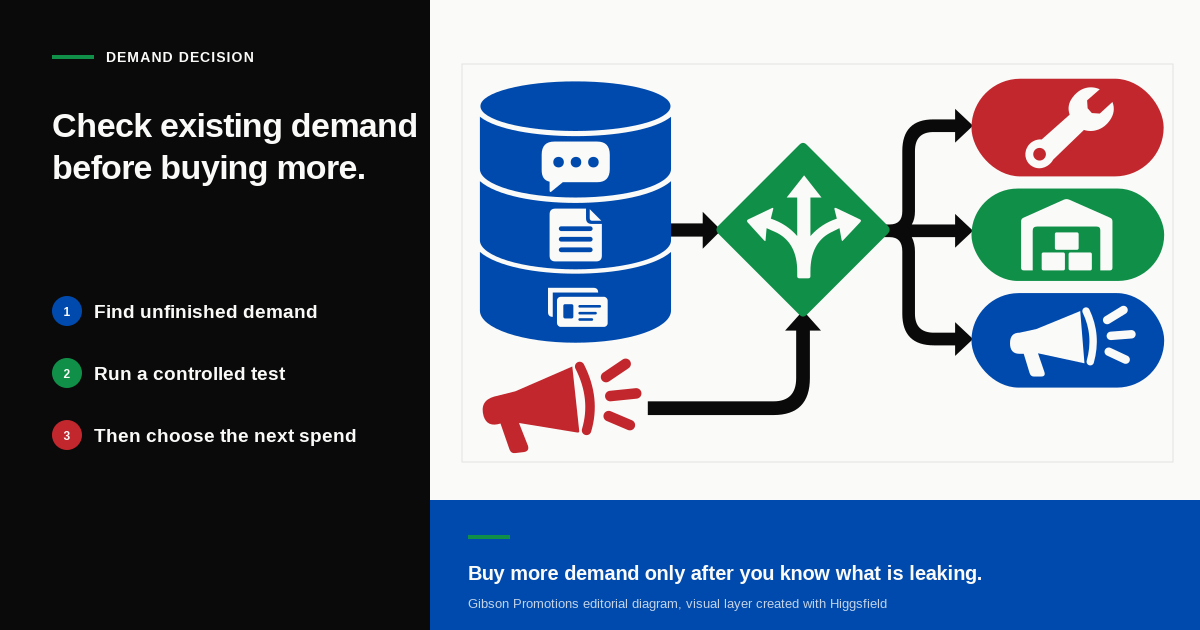
If enquiries are unanswered, more advertising creates more unanswered enquiries. If quotes have no owner, more quotes expand the same backlog. If delivery is full, more bookings create longer waits.
Volume helps only when the next step has capacity. A healthy top-of-funnel metric can hide a lower handoff that is full, slow or unknown.
How do you find the first weak step?
- Choose one recent group and allow enough time for results to appear.
- Count supported records at each step.
- Keep duplicates and unknowns separate.
- Find the first large or unexplained drop.
- Read a sample of records at that handoff.
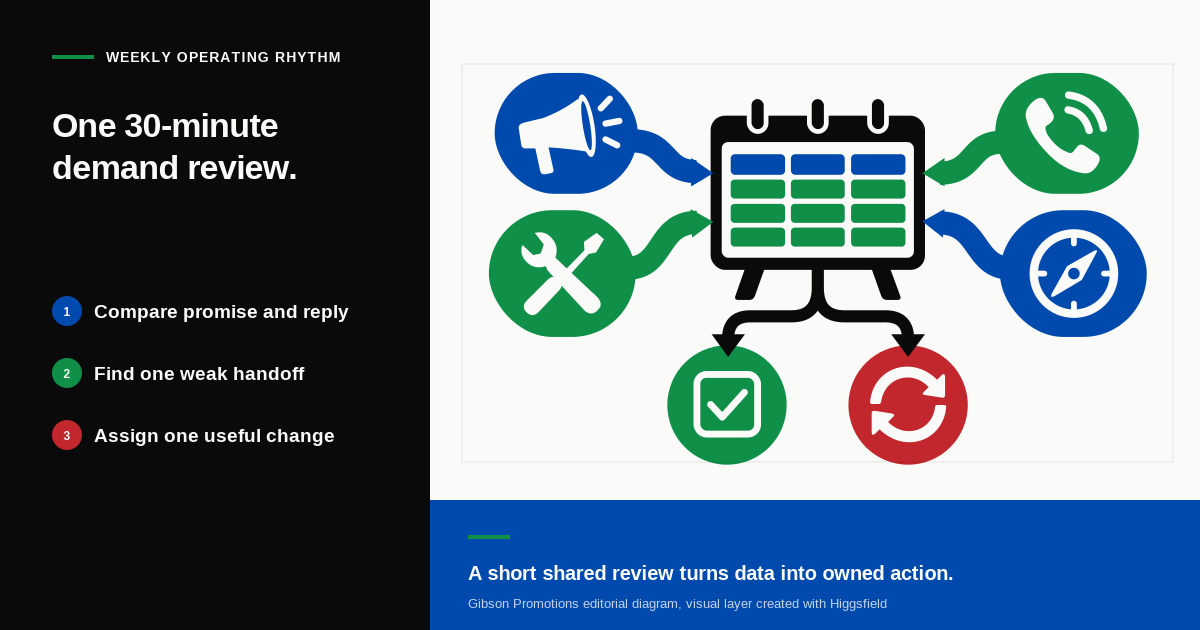
- Assign one owner and one test change.
- Review the later outcome after the test window.
What should you fix first?
Fix visibility before automation, ownership before volume and capacity before promotion. This order prevents the business from automating an unclear rule or buying work it cannot handle.
After the change, run the ladder again. The limiting step may move.
Frequently asked questions
Is the biggest drop always the main constraint?
No. Check the business value, capacity and quality at each step. A smaller drop in a high-value step may matter more.
Should we fix every gap at once?
Start with the first supported bottleneck. Changing many steps together makes it harder to learn what helped.
What if records are missing?
Treat missing evidence as its own constraint. Improve the record and avoid inventing an outcome.
Can the constraint change?
Yes. Once one handoff improves, another step may become the limit.
Sources and evidence
- Acquisition.com: Scaling Roadmap context: The official training teaches daily advertising activity, long-term nurture, fixing the main constraint at the current stage and reviewing customer, sales and marketing work together.
- Google Ads: value-based bidding best practices: Google recommends connecting conversion values to business goals and checking whether the data can support the measurement.