What you need to know
- More leads help only when the business can answer, qualify, quote and follow up the work already arriving.
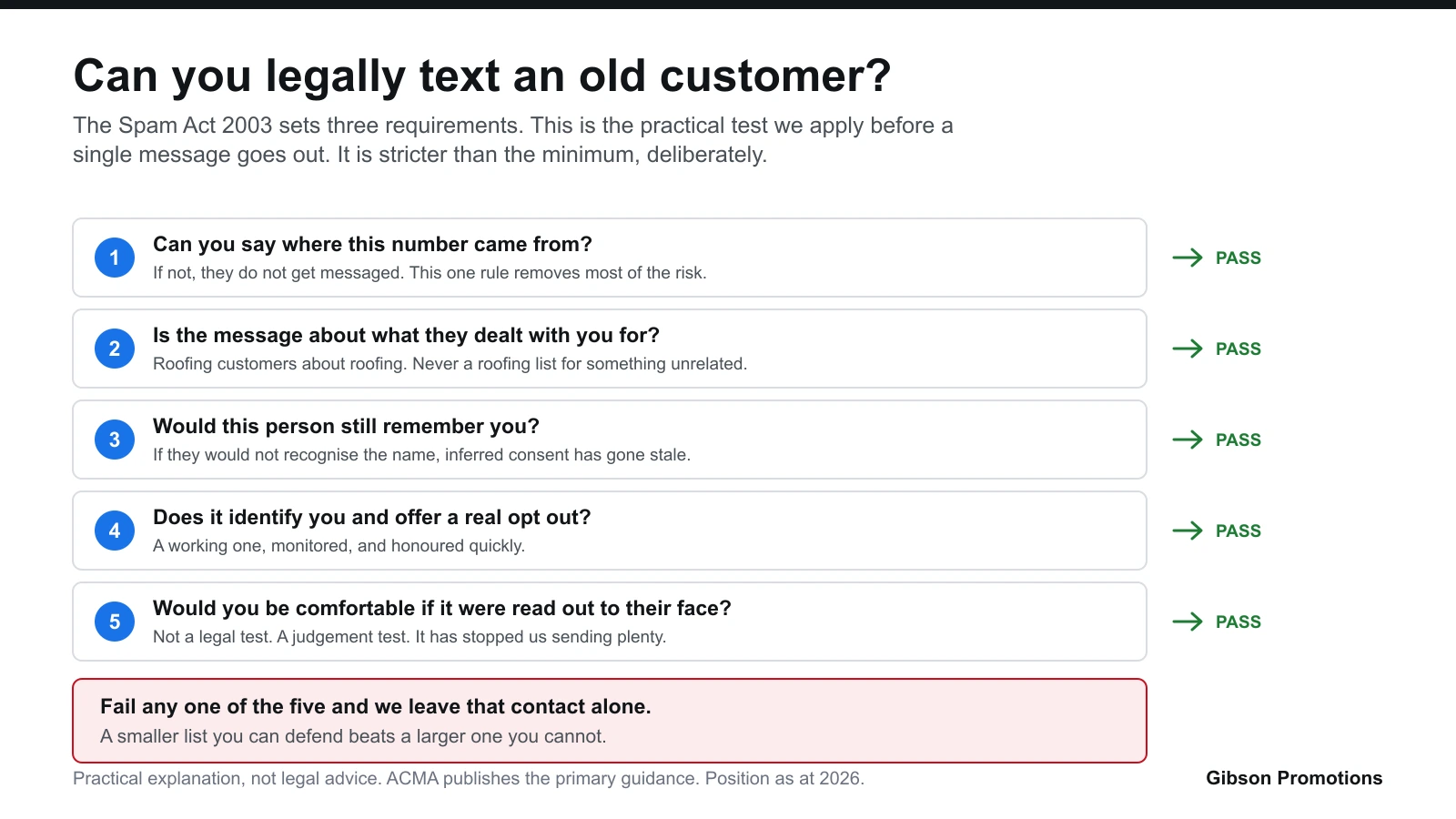
- Old records are not automatically marketable. Relationship, permission, relevance and opt-outs must be checked.
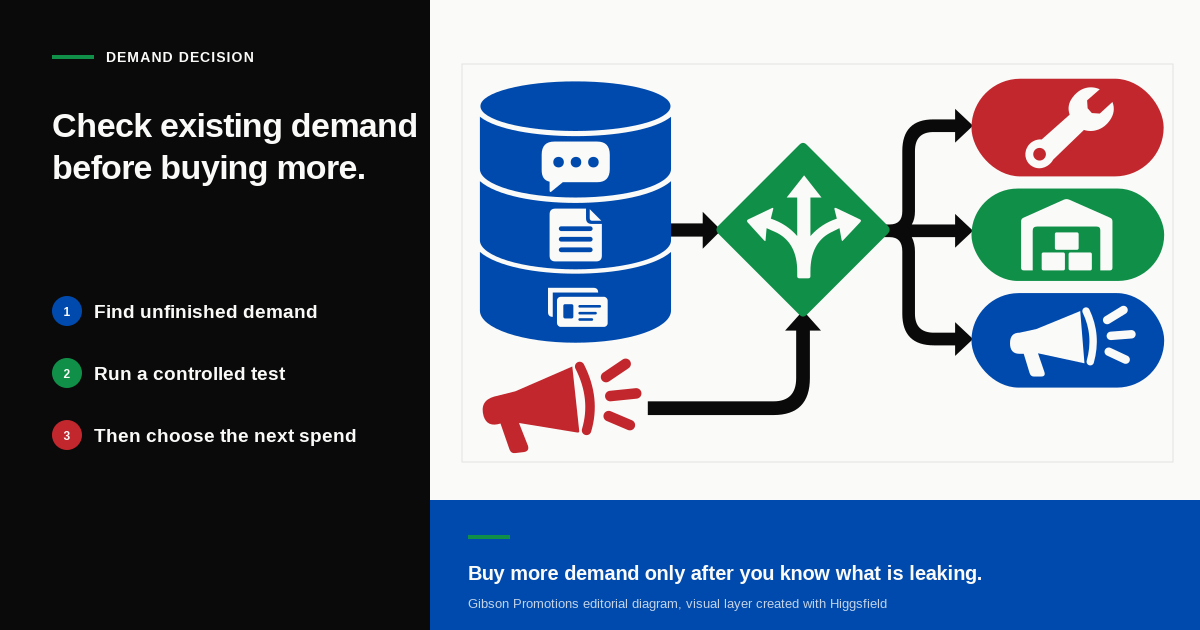
- A small reactivation test can reveal whether existing demand is still useful.
- Gibson's own list produced 35 confirmed jobs worth $9,415 from 130 past contacts, but another list will differ.
- The answer may be better follow-up, more staff capacity, more marketing or a measured combination.
Should you buy more leads or improve follow-up first?
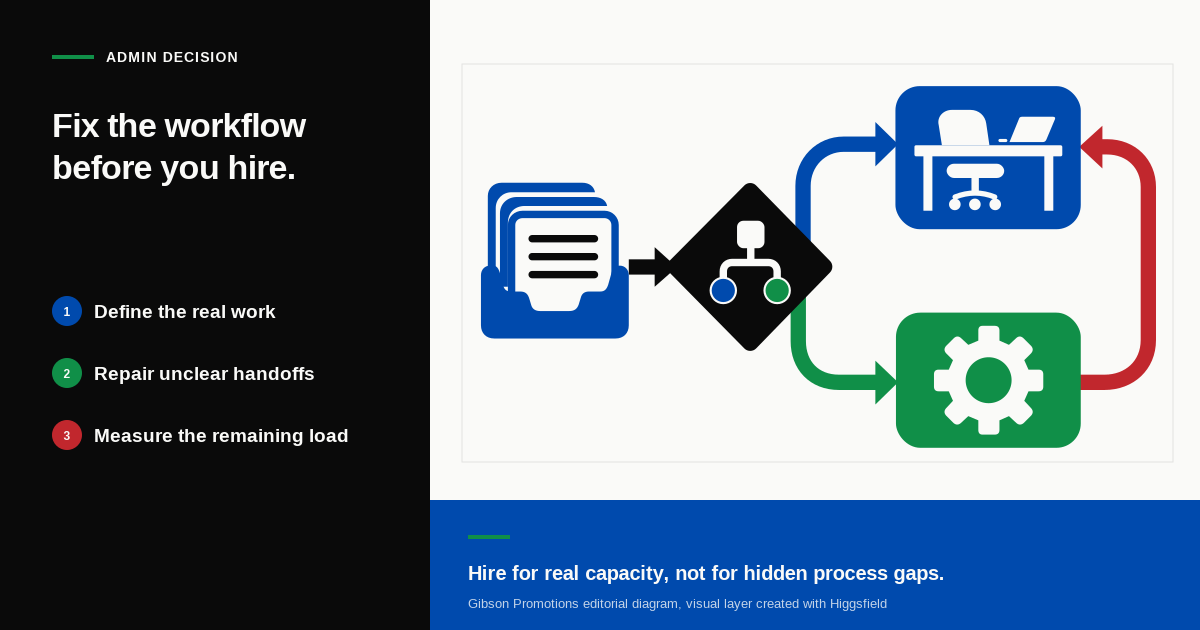
Check follow-up first when the business cannot show what happened to recent enquiries, quotes or past customers. More marketing will feed the same unclear path.
If past customers are the gap, learn how to reactivate customers without relying on discounts.
Buy more demand when the current path is visible, response times are controlled, useful work is being completed and the team has capacity for more. Many businesses need both changes, but the order still matters.
What signs point to a follow-up problem?
These signs do not prove lost revenue. They show where the owner should look.
- Missed calls have no named recovery owner.
- Quotes are marked sent with no later decision.
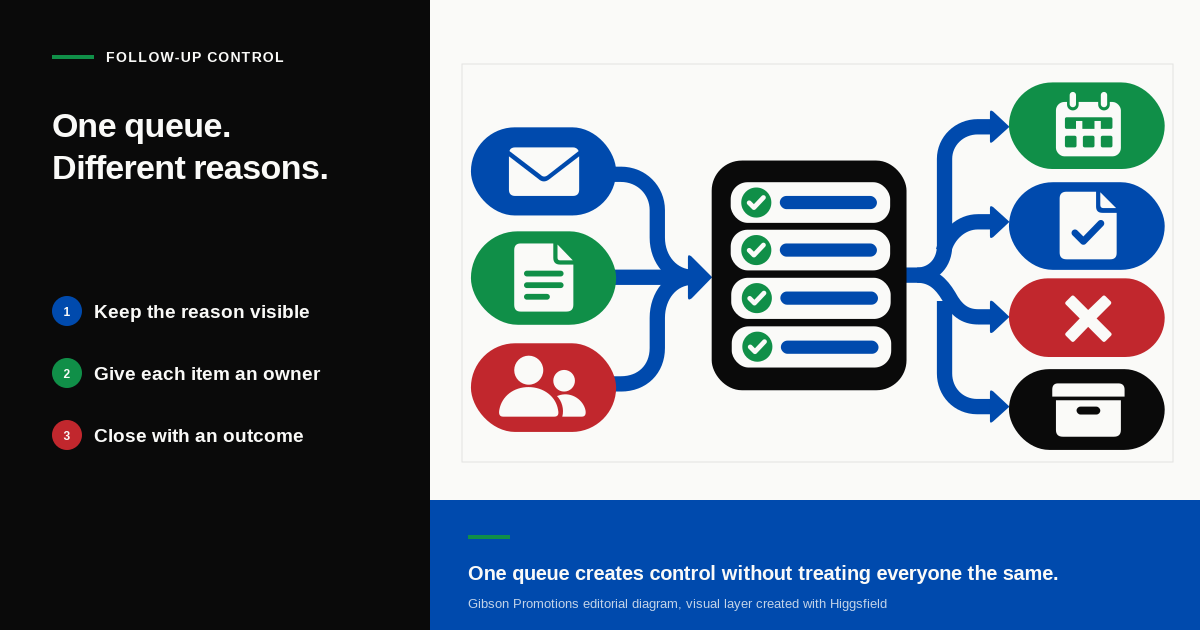
- Customer replies sit in personal inboxes.
- Staff use different notes, spreadsheets and reminders.
- A lead report ends at forms or calls.
- The business cannot separate booked, closed and unknown records.
What signs point to a capacity problem?
Capacity is more likely when the work is already clear and measured.
- The queue has named owners and due times.
- The team completes the process consistently but tasks still become overdue.
- Qualified demand exceeds available booking or delivery slots.
- Adding more demand would create longer waits or lower service quality.
- The owner can show the volume and time needed for the extra role.
How do you test existing demand safely?
Choose one group with a clear relationship and reason. Examples include recent quotes with no recorded decision, customers who may be due for another service or older genuine enquiries with no clear next step.
Review permission and opt-outs, approve the message, name the reply owner and decide what will count as booked, later, closed, opted out or unknown. Start small enough that the team can read and answer every reply.
What happened in Gibson's own test?
Gibson contacted 130 past contacts from its own list after more than a year without contact. Thirty-five booked confirmed jobs worth $9,415 in total. Replies were not counted as wins.
This was a small own-list result for small-ticket Gibson work. It does not predict another business's result. Its useful lesson is the method: choose a known group, own the replies and connect later work to the conversation.
How should you compare reactivation with new marketing?
Compare the two paths using the same business outcomes.
| Question | Existing-demand test | New marketing |
|---|---|---|
| Who entered? | Reviewed people with a known relationship | Observed new enquiries from the campaign |
| What did it cost? | Review, contact and reply-handling cost | Media, creative and lead-handling cost |
| What happened? | Booked, closed, opted out or unknown | Qualified, booked, closed or unknown |
| What became work? | Completed and paid jobs where linked | Completed and paid jobs where linked |
| What is the limit? | List fit, permission and timing | Market demand, targeting and budget |
What decision should the owner make next?
If records are scattered, fix the follow-up path. If the path works but the team is overloaded, add capacity. If the path works and capacity is available, increase suitable marketing in a measured test.
Do not choose from a dashboard alone. Review customer fit, job value, delivery cost, payment and team capacity before changing spend.
What is the simplest first check?
Take 20 recent enquiries and 20 quotes. For each one, mark the owner, next action and supported outcome. Then count how many are booked, closed, opted out, still open or unknown. That small review will tell you whether buying more leads is the first problem to solve.
Frequently asked questions
Is customer reactivation always cheaper than buying new leads?
No. Cost depends on list quality, permission, message review, reply handling and outcomes. Compare both paths through booked, completed and paid work rather than only messages or leads.
Can we contact every old customer?
No. Review the source, relationship, relevance, permission and opt-out history first. Commercial email and SMS must follow Australia's spam rules.
How many records should a first reactivation test use?
Use a group small enough for the team to review and answer properly. Gibson's governed service begins with a bounded review rather than a whole-database blast.
What if the business really does need more leads?
Increase marketing when response, qualification, quoting and follow-up are visible and the team has capacity. Track the new enquiries through later business outcomes.
What did Gibson's pilot produce?
Gibson's own 2026 pilot contacted 130 past contacts and produced 35 confirmed jobs worth $9,415. It was Gibson's list and is not a forecast for another business.
Sources and evidence
- ACMA: avoid sending spam: ACMA explains the consent, sender identification and unsubscribe rules that apply to commercial email and SMS.
- Australian Bureau of Statistics: Characteristics of Australian Business, 2024-25: The ABS reports that 35% of businesses experienced a skills shortage. Among those businesses, 48% selected wages or salary costs as a reason.