What you need to know
- One flyer number identifies a response path, not always the exact run.
- The service address can support an area comparison but may not prove where the flyer was received.
- Overlapping dates, repeat drops and shared artwork make clean tests harder.
- Choose the smallest tracking design that answers the business question.
What does one flyer number prove?
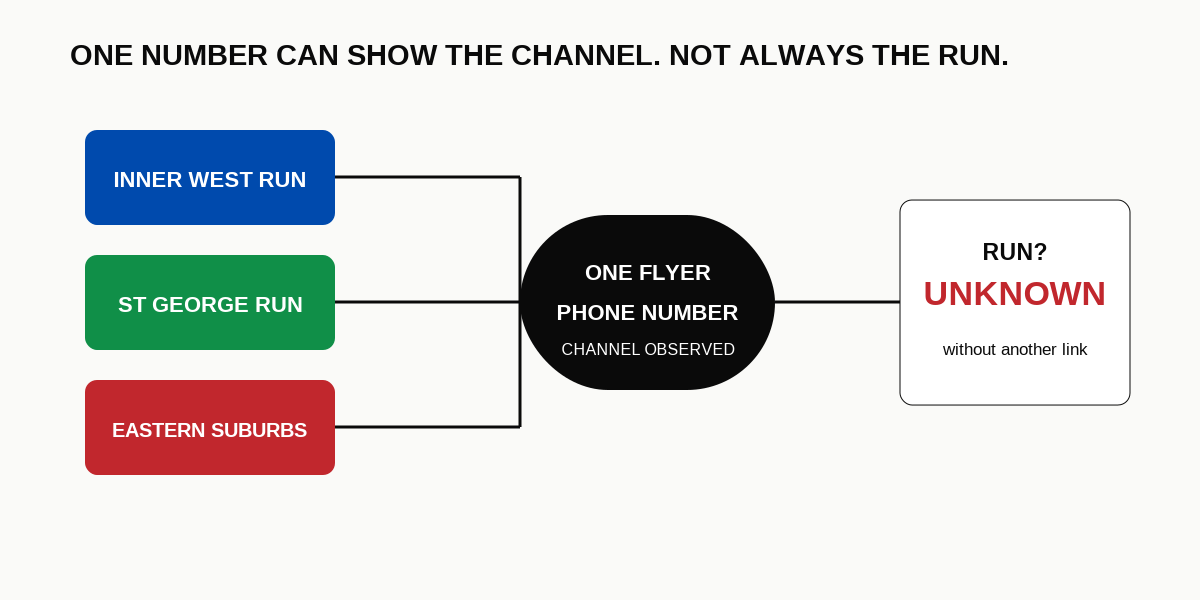
When a person calls a number used only on flyers, the call supports a flyer response. If the same number appears across several suburbs, it does not by itself identify the exact suburb, run or artwork.
The caller's service address can help group work by area. But someone may have picked up the flyer elsewhere, kept it from an older run or shared it. Describe that link as an area match, not perfect campaign proof.
How would an electrical business see the gap?
Imagine the same electrical flyer is delivered across the Inner West, St George and the Eastern Suburbs. Every version uses one phone number. The call log can show flyer calls. The job system can show service addresses. It cannot reliably split the calls by run when the delivery windows overlap.
The owner can still learn. They can compare response locations, job fit and outcomes by service area. They must label the run-level source as uncertain unless another identifier supports it.
| Question | Possible evidence | Limit |
|---|---|---|
| Did the flyer path create calls? | A flyer-only tracked number | Offline sharing can still occur |
| Where was the job? | Service address or booked location | The flyer may have been received elsewhere |
| Which run caused it? | Unique number, code or non-overlapping test | The customer may respond late |
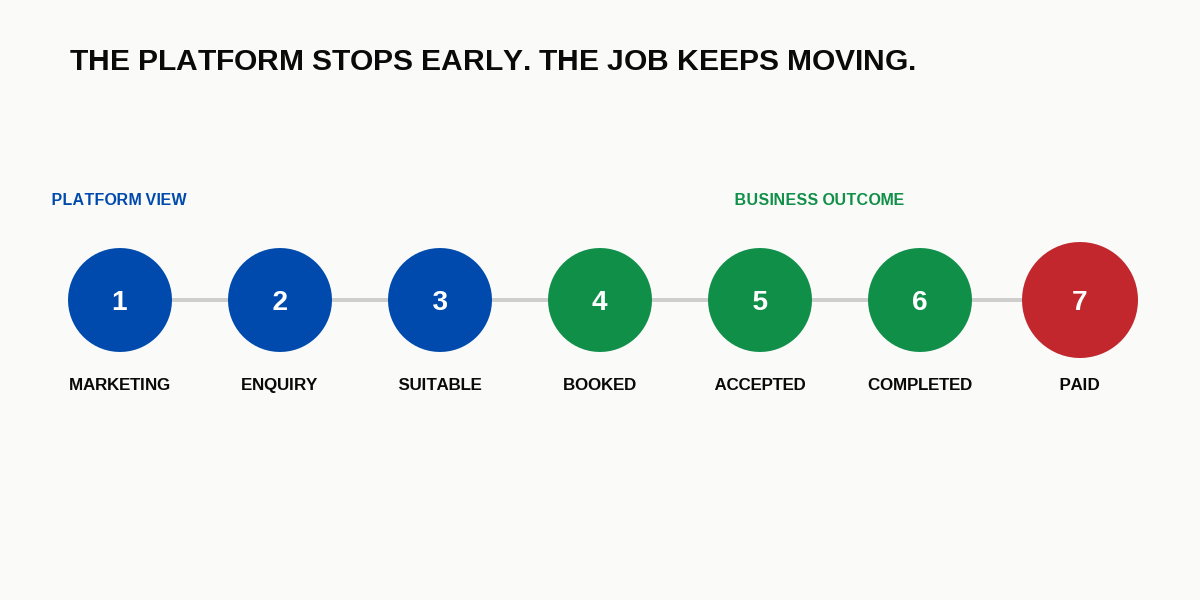
| Was the run valuable? | Completed and paid job match | Delivery cost and job cost still matter |
Why can a detailed dashboard still be wrong?
A dashboard can split calls neatly by suburb even when the source evidence does not support that split. Clean colours do not repair a weak link. The report should show the difference between observed source, service area and inferred run.
Which tracking design should you choose?
- Write the exact question before choosing numbers or codes.
- Use one number if channel-level response is enough.
- Use separate identifiers only when the extra detail will change a decision.
- Avoid overlapping tests when you need a clear run comparison.
- Keep delivery dates, maps and artwork versions beside the response data.
- Match completed jobs to the observed source only where the records support it.
What can Gibson set up?
Gibson can help plan the distribution and call-tracking structure around the question you need answered. Start with Tracked Print, Call Tracking or the Close the gaps review.
Frequently asked questions
Do I need one number per suburb?
Not always. Use extra numbers only when suburb-level separation matters and the campaign volume supports a useful comparison.
Can the job address identify the flyer source?
It can support an area match. It does not always prove where or when the flyer was received.
What if the same area gets several drops?
Keep each run and date visible. Late responses may be hard to assign without another identifier.
Should unknown responses be removed?
No. Keep them visible so the report shows the real strength of the evidence.
Sources and evidence
- Australia Post: Campaign Targeter: Australia Post explains how delivery catchments can be planned by radius, custom boundary, suburb, postcode and other reference layers.
- Google Ads: manage offline conversions: Google documents how an online ad interaction may be connected to a later offline outcome. A successful upload does not by itself prove attribution or improvement.