What you need to know
- The bigger leak is the yes that never becomes a booked time, not the no-show on the day.
- Offer two specific times in your first reply. A date-and-time plan lifted follow-through in a randomised trial; a date alone did not.
- Text reminders help, but by less than many vendors claim: about 1.48 times the odds of turning up across eight trials.
- What the reminder makes people think about matters. Saying what turning up avoids did best in a Sydney hospital trial.
- Follow up once if someone goes quiet, then close warmly.
Most advice on how to reduce no-shows starts with reminder texts and deposits. We think that starts too late. A review of studies on people's intentions found that about half of those who intend to act never do. The paper puts it at 48%. That was about exercise, not buying, but anyone who runs a service business knows the feeling. Someone says "yes, sounds good". Then nothing happens.
At Gibson Promotions we've spent 20 years helping Sydney businesses reach customers, and the biggest leak we see isn't the person who books and doesn't turn up. It's the person who says yes and never books at all. Here is what the research says, where we disagree with the usual advice, and the three steps we use ourselves.
Why do people say yes and then not book?
Most people who say yes mean it. They just don't act on it. Researchers call it the intention-action gap. Life gets busy, the moment passes, and nobody asked them to commit to anything specific. The NSW Government's Behavioural Insights Unit puts it plainly: around 30% of no-shows come from people simply forgetting.
So the problem is rarely a change of mind. It's that "yes" was never turned into a time, a place and a reason to turn up.
How do you turn a yes into a booking?
Ask them to pick a specific day and time in your very first reply, and offer two options rather than an open question. In a well-known randomised trial, people who wrote down the date and time they planned to get a flu shot were 4.2 percentage points more likely to get one. Here is the part most people miss: writing down a date alone, without a time, made no difference. The time is what does the work.
That trial was about vaccination, not sales meetings. We believe the mechanism carries over, because the same thing happens in our own conversations. "Let's catch up next week" goes nowhere. "Tuesday at 10 or Wednesday at 2?" gets an answer. In practice:
- Reply to the yes within the hour if you can.
- Offer two specific times: "Would Tuesday at 10 or Wednesday at 2 suit?"
- Once they pick one, confirm it in writing, with the address or the link.
“In our experience a lot of Sydney work is lost between 'yes' and the booking. The fix isn't more follow-up. It's asking for a specific time in the very first reply, then one clear reminder. We built Reignite around that: get back to the people who already said yes, and book them in.”
Do reminder texts actually reduce no-shows?
Yes, but by less than many software vendors claim. A review of eight randomised trials found that text reminders raised the odds of people turning up by about 1.48 times. In the Sydney hospital trial we come to next, the standard reminder still left 14.4% of appointments missed. You will see claims online of no-shows cut "by up to 60%". The controlled trials we found point to a smaller, steadier gain. Plan for that, and treat anything bigger as a bonus.
What should a reminder text say?
Here the evidence pulls in two directions, and we think both sides are worth hearing.
On one side, wording usually matters less than people think. In a public archive of thousands of headline tests, the best headline beat the average one by only about 1.18 times once you correct for luck. Most "winning" wording is noise.
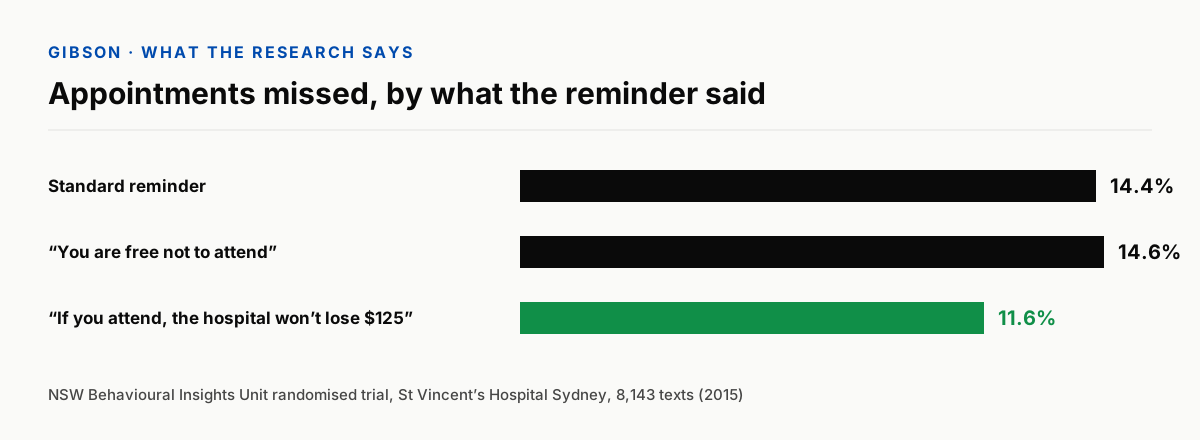
On the other side, the NSW Government's Behavioural Insights Unit ran a randomised trial at St Vincent's Hospital Sydney with 8,143 reminder texts, and the wording clearly mattered:
| Reminder message | Appointments missed |
|---|---|
| Standard reminder | 14.4% |
| "You are free not to attend, but please call if you need to cancel" | 14.6% |
| "If you attend, the hospital will not lose the $125 we lose when a patient does not turn up" | 11.6% |
Two things stand out. Telling people they were free not to come did nothing. Telling them what turning up avoids did the most. Each missed appointment cost that hospital about $125.
Our read of both sides: clever wording rarely matters, but what the reminder makes the person think about does. A reminder that says what they keep by turning up beats one that just repeats the time.
For a service business that might be: "See you tomorrow at 10. We've set the hour aside for your review, so bring last year's customer list if you have it."
How many times should you follow up someone who goes quiet?
Once or twice, then let it go warmly. Research on email reminders found that reminders brought more responses, but also more unsubscribes. Every extra chaser buys a little more response with a little more goodwill. If someone goes quiet after saying yes, send one short note with two new times. If that gets nothing, close the loop politely and leave them with something useful. People remember who was easy to deal with.
“Many Australian service businesses spend their marketing money getting the first yes, then let it go cold. Over 20 years in Sydney we've learned the cheapest growth is often the follow-up nobody did: the quote that wasn't chased, the enquiry that never booked. Reignite exists to fix that gap.”
What we believe, and where we part ways with the usual advice
1. The leak is the yes that never books, not the no-show. Most no-show advice is about the last day. We think the bigger loss happens earlier, between "yes" and a booked time, and that's where the research on date-and-time plans points.
2. One good reminder beats a sequence of them. Some businesses send three or four reminders and swear by it. They may be right for their customers. The evidence we've seen says each extra one costs goodwill, so we'd start with one and add more only if a test shows it pays.
3. Don't ask for a deposit before the first conversation. This one is our view, not a research finding. Deposits make sense for a repeat appointment someone already values. For a first conversation with someone who has just said yes, we think it adds friction at the worst moment. We haven't tested it, and we'll say so if we do and turn out to be wrong.
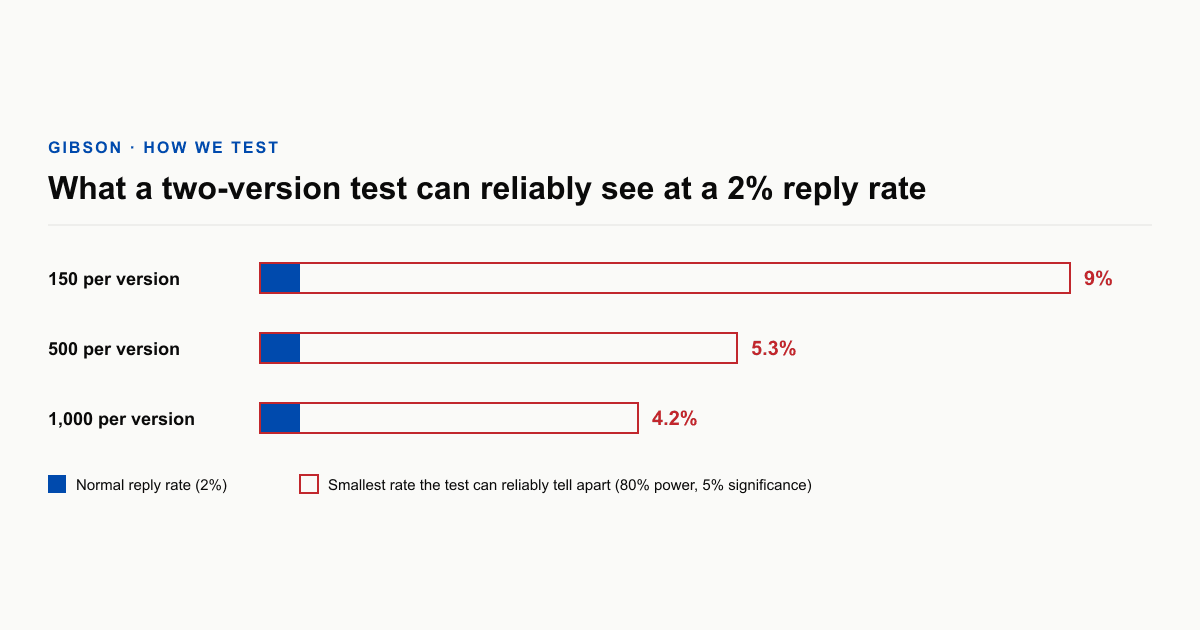
4. Test it yourself. We run our own follow-up as randomised tests (here's how we set ours up), the same way we'd suggest a client does. Right now we're testing which offer gets more people to put their hand up, and we'll publish what we find, including what didn't work.
The plan in three steps
- Turn the yes into a time in your first reply. Offer two options.
- Send one reminder the day before, saying what they keep by turning up.
- Follow up once if they go quiet, then close warmly.
Gibson Promotions has helped Australian businesses reach and keep customers since 2006. If you have a list of people who said yes and never booked, it's worth a look before you pay for your next batch of new leads: see how Reignite works.
Frequently asked questions
How do you reduce no-shows?
Turn every yes into a specific day and time straight away, offering two options. Then send one short reminder the day before that says what they keep by turning up. Trials show date-and-time plans and text reminders both lift attendance. In a Sydney trial, the reminder's framing changed the result.
Why do customers say yes but never book?
Most mean it but never act on it. Research on intentions suggests about half of people who intend to act don't follow through. Busy lives, no specific time and no reminder are the usual reasons. It's rarely a change of mind, so the fix is a booked time, not more persuasion.
Do appointment reminder texts work in Australia?
Yes. A NSW Government randomised trial at St Vincent's Hospital Sydney sent 8,143 reminder texts. The best-framed version cut missed appointments from 14.4% to 11.6% compared with the standard reminder. Telling people they were "free not to attend" made no difference.
How can Reignite help with people who said yes and went quiet?
Reignite is Gibson Promotions' lead reactivation platform. It works through the people you never got back to: old enquiries, quotes that didn't go ahead and customers who went quiet. It gets back to them in your voice and books the ones still interested. The first run of up to 200 is at our cost.
Sources and evidence
- Rhodes and de Bruijn (2013), British Journal of Health Psychology: The physical activity intention-behaviour gap: 48% of intenders did not act.
- Milkman et al. (2011), PNAS: Date-and-time plans lifted flu vaccination by 4.2 percentage points; a date alone made no difference.
- Guy et al., Health Services Research: SMS reminders across 8 trials: odds of attending about 1.48 times.
- Damgaard and Gravert (2018), Journal of Public Economics: Reminders lifted response and unsubscribes together.
- Matias et al. (2021), The Upworthy Research Archive, Scientific Data: Gibson's re-analysis: the best headline was about 1.18 times the average after correcting for chance.
- NSW Behavioural Insights Unit (2015), St Vincent's Hospital Sydney: Randomised trial of reminder wording, 8,143 texts.