What you need to know
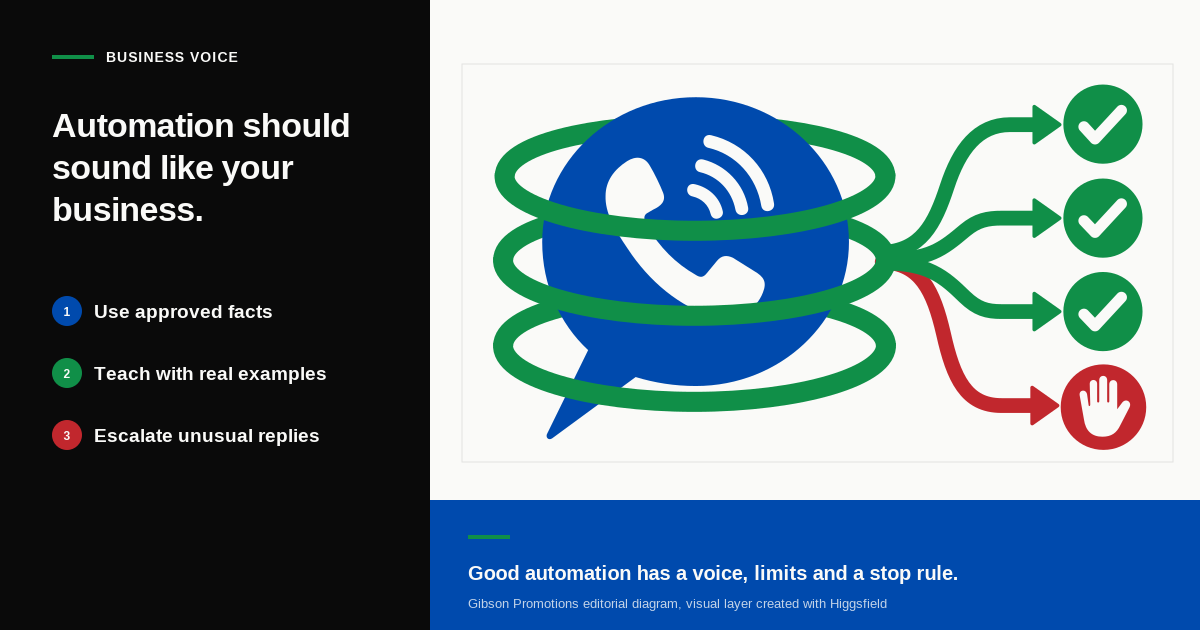
- A business voice is a controlled set of facts, examples and boundaries.
- AI should never invent past contact, urgency, price, availability or customer history.
- Real approved examples teach rhythm better than a list of adjectives.
- The system needs separate rules for first contact, replies, objections and escalation.
- Review messages after real replies and update the controlled examples.
- The voice controls belong inside the custom workflow, not in one loose AI prompt.
Can AI copy the owner's voice from one prompt?
It can copy parts of a writing style. One prompt cannot safely hold every business fact, offer rule, legal limit and customer detail. A sentence can sound real and still be false.
Build the voice from approved examples and explicit controls. The goal is consistent, truthful communication, not a perfect impersonation.
What should the voice pack contain?
| Part | What belongs |
|---|---|
| Identity | Business name, sender name and role |
| Facts | Approved services, locations, prices and availability |
| Examples | Real messages the owner approves |
| Banned claims | Past-contact, urgency and result claims the system cannot make |
| Question rule | How many questions and what each should achieve |
| Escalation | Topics that always move to a person |
Why are examples stronger than tone words?
Friendly, professional and warm mean different things to different writers. Real approved messages show sentence length, greetings, questions, closings and how much detail the business uses.
Use examples from several situations. Do not train the system only on sales messages if it must also handle confusion, complaints or opt-outs.
Which facts must never be invented?
- That the business spoke with the person before.
- Why an enquiry or quote went quiet.
- That a service is due without supporting history.
- A price, saving or deadline.
- Available booking times.
- A customer result or testimonial.
- Consent or permission to send the message.
How should replies be controlled?
Sort the reply before writing an answer. AI may draft a normal reply within approved rules. Send complaints, legal questions, payment disputes, quote changes, safety issues and unclear permission to a person.
Limit automated back-and-forth. A system that keeps replying after the customer's need becomes unusual can sound less human with every message.
How do you test the voice?
- Use fictional test records, never a real customer for the first run.
- Test short, unclear, angry, positive and opt-out replies.
- Check every business fact against its source.
- Ask whether the message sounds natural when read aloud.
- Check that one clear next action remains.
- Have the owner approve the examples and boundaries.
How does the voice improve?
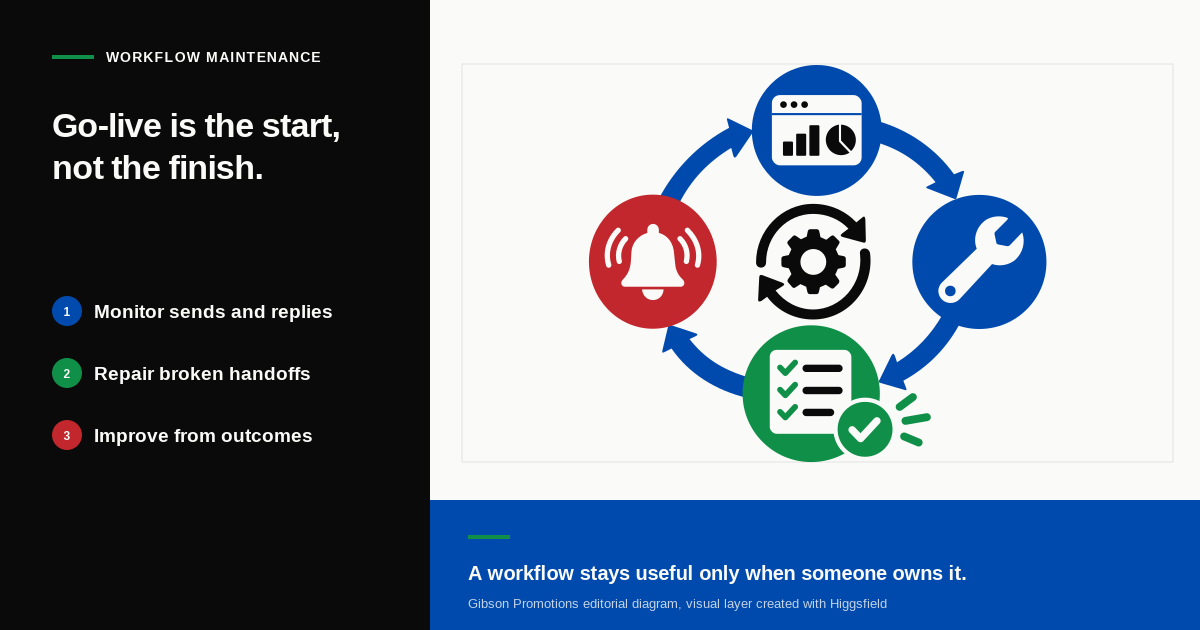
Review messages that needed major edits or caused confusion. Update the approved examples, banned claims or rules for when a person steps in. Do not let the system learn from every staff message on its own.
Keep a dated version so the business can explain which rules produced a message.
Frequently asked questions
Can AI perfectly copy a business owner?
No. It can follow approved patterns, but the business still needs fact controls, examples, escalation and review.
How many examples does a business voice need?
Use enough approved examples to cover the main situations: opening, normal reply, question, objection, booking, closure and opt-out. Quality and coverage matter more than a magic number.
Should AI answer every customer reply?
No. Complaints, legal questions, payment disputes, quote changes, safety issues and unclear consent should move to a person.
Can the AI mention an old enquiry?
Only when the record supports that history and the business has approved the wording. It must not invent a past conversation.
Sources and evidence
- ACMA: avoid sending spam: ACMA explains consent, sender identification and unsubscribe requirements for commercial email and SMS.
- ACMA: consent expectations: ACMA expects businesses to use clear consent terms, make withdrawal easy and maintain oversight of providers.